The difference between solar and electric gate openers comes down to how each one gets its power, and that single difference affects installation cost, wiring, and reliability. Electric gate openers connect directly to your home’s electrical system and run on constant power.
Solar gate openers run on a battery charged by a solar panel and need no wiring at all. Deciding between the two depends on where your gate sits, how often it opens, how much sun the area gets, and how much you want to spend upfront versus over time.
We install and service both solar-powered gate systems and hardwired openers across the Bay Area, so matching the system to your property matters more than picking a default.
The Difference Between Solar and Electric Gate Openers? How Do They Work?
Each system pulls power differently, and that single difference shapes everything from installation cost to how the opener performs in bad weather.
How Solar Gate Openers Work
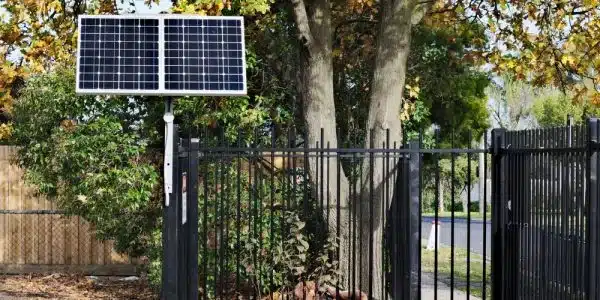
Solar gate openers store energy in a rechargeable battery that a small solar panel keeps charged throughout the day. The opener draws from that battery any time the gate cycles, not directly from the panel itself.
Because there’s no wiring running back to a power source, crews can mount the entire system near the gate itself, which makes solar a strong option for driveways set far from the house or property line. Most residential solar gate openers run on 12 or 24-volt DC systems, matching the low, steady draw a battery needs to stay charged between sunny stretches.
How Electric Gate Openers Work
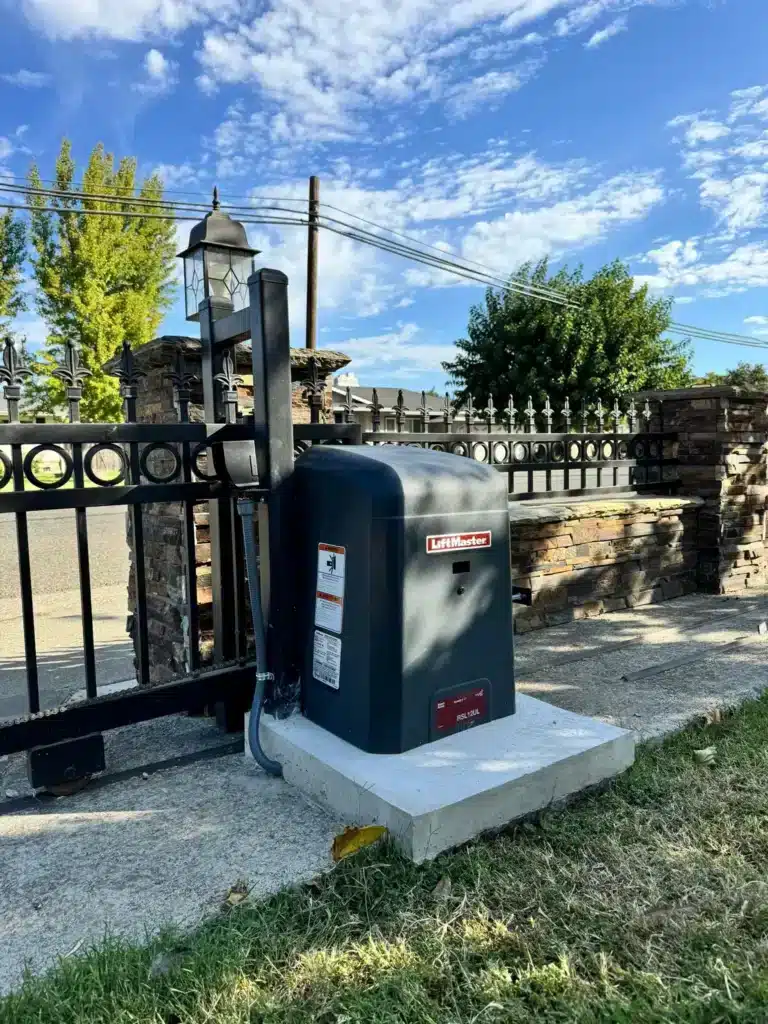
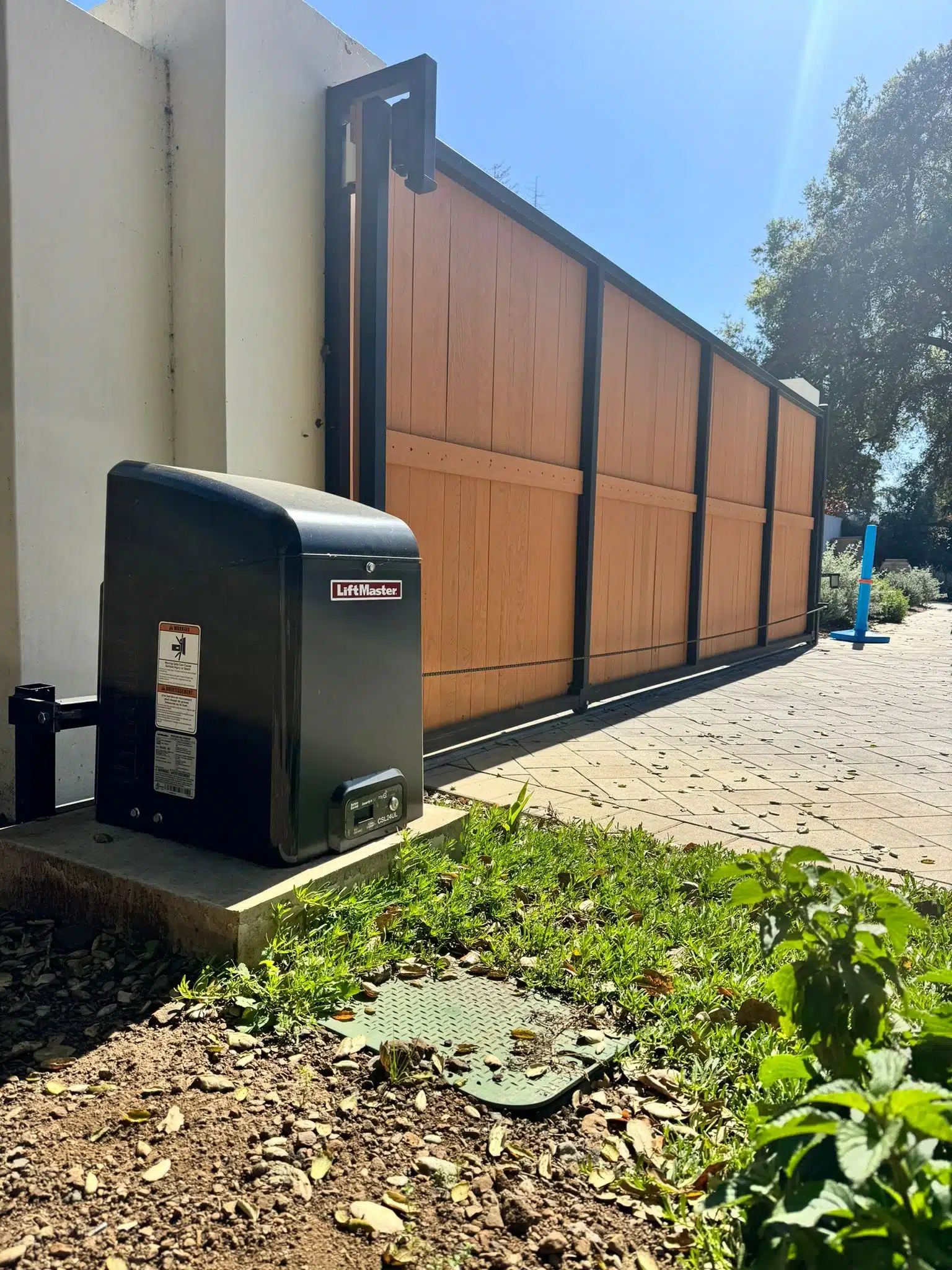
Electric gate openers connect directly to your property’s electrical system, typically running on standard AC power. That direct connection gives the opener constant power without relying on stored charge or sunlight, which is part of why our electric gate openers are the more common choice among Bay Area homeowners with easy access to wiring. Installation does require running a line from a power source to the gate, so cost and complexity often depend on how far the gate sits from the nearest outlet or panel.
Solar or Electric Gate Opener? What’s Best for Your Gate?
Once you understand the difference between solar gate openers and electric gate openers, the real question becomes which one fits your gate and your property. Distance from a power source, how often your automatic driveway gate cycles each day, how much direct sun the area gets, and your overall motorized gate cost all factor into the decision all factor into the decision.
The comparison below breaks down where each option holds up and where you’re more likely to run into automatic gate opener problems.
| Criteria | Solar Gate Opener | Electric Gate Opener |
| Power Source | DC battery charged by solar panels | AC utility grid |
| Installation Considerations | Requires solar panels, battery storage, and proper panel placement | Requires connection to the property’s electrical system |
| Ongoing Energy Cost | Near zero | Monthly utility draw |
| Maintenance | Battery replacement every 3–5 years | Ongoing seasonal electrical upkeep |
| Weather Dependence | Yes (shade/clouds reduce output) | None |
| Gate Size/Weight Limits | Best under ~400 lbs | Any size or weight |
| Reliability During Outages | Strong (battery-backed) | Fails without battery backup |
| Smart Home Integration | Limited by battery capacity | Full support |
| Environmental Impact | Low carbon footprint | Grid-dependent emissions |
| Best Use Case | Remote, low-traffic, sunny properties | Heavy gates, commercial, shaded sites |
Expert tip: In our experience installing gate systems across the Bay Area, most of our clients still lean toward electric openers simply because they don’t have to think about weather conditions or battery charge levels at all. That said, weather affects gate performance less than most people assume when it comes to solar.
We recommend as a way to get the best of both is by combining an electric gate opener with a solar backup for your gate opener. A well-maintained solar backup battery can hold enough to run a residential gate for five to fourteen days with zero sunlight, the same storage principle behind modern solar-plus-storage systems.
Rolling Gates: Solar & Electric Gate Opener Installation & Repair Across the Bay Area
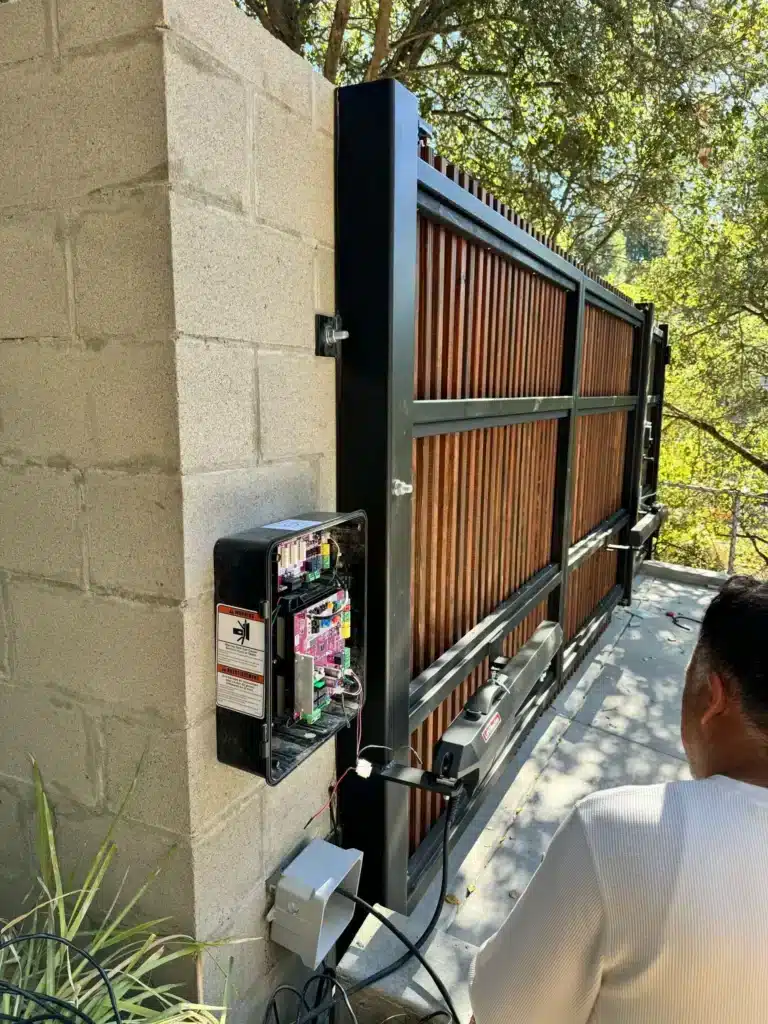
At Rolling Gates, we install and repair both solar and electric gate openers throughout the Bay Area with more than seven years of experience, covering everything from San Francisco driveways to remote properties in Napa and across the Bay Area.
As a trusted fence contractor in Walnut Creek, we run every opener through the same 25-point diagnostic before it goes live, regardless of power source. Our technicians hold License #1124273, BBB accreditation, and carry a 5.0 Google rating, so property owners get the same fully licensed, bonded, and insured install whether the gate runs on battery power or straight off the grid.
Solar or Electric: Which One Wins for Your Gate
If your gate sits near your home’s electrical panel, electric is usually the simpler and more dependable pick. If it sits far from power or in a hard-to-wire spot, solar handles it just as well, and pairing it with a backup battery closes the gap on cloudy stretches.
Either way, the choice comes down to your property, not a default. Get a free estimate and we’ll tell you straight which setup makes sense for your gate.