
Apartment gate security entry management is the integrated system of physical barriers, access control technology, and management protocols that determine who gets in and out of a residential community, and getting it wrong costs more than getting it right ever would. This guide breaks down every component, system type, and decision factor property managers need to know, including how gate intercom systems work into the bigger picture, from hardware selection to implementation pitfalls.
Key Takeaways on Gate Security Entry Management
- Apartment gate security and entry management is a layered system of physical gates, access hardware, and management software, not a single product or feature.
- The six main system types (keypad, RFID fob, intercom, app-based, license plate recognition, biometric) each suit different property sizes, budgets, and resident profiles.
- Poor gate security carries real financial costs: higher insurance premiums, resident churn, harder-to-fill vacancies, and legal liability exposure that planned maintenance prevents.
- Successful implementation depends as much on credential management policy and resident onboarding as it does on hardware selection.
- Local expertise matters for Bay Area properties because permit requirements, site conditions, and emergency repair response times are all location-dependent.
What Is Apartment Gate Security and Entry Management?
Apartment gate security and entry management combines physical barriers, access control technology, and operational protocols into one coordinated system that governs who enters and exits a residential community. It goes well beyond a standard lock and key.
A basic lock secures a single point with a single credential. Apartment security entry management, by contrast, involves multiple layers: the physical gate structure (sliding or swinging), access hardware like keypads, intercoms, and RFID readers, and a management back-end that logs every entry event and lets administrators control credentials remotely.
This layered approach matters because resident expectations have risen alongside rents. According to the Federal Reserve Report on the Economic Well-Being of U.S. Households in 2024, the median reported rent reached $1,200 in 2024, rising approximately 10% each year since 2022. Residents paying a premium expect professional security infrastructure that matches their investment. Gate security and entry management is no longer a luxury feature; it’s a baseline expectation in competitive multifamily housing markets.
What Is a Gate Security System and How Does It Work?
A gate security system is a coordinated set of hardware and software components that controls physical access to a property. Here’s how a typical entry event flows: a resident or visitor presents a credential (PIN, fob, app, or intercom call), the access control panel authenticates that credential against its database, the gate operator receives the signal and drives the gate open, and the system logs the event with a timestamp. That audit trail is critical for liability protection and security reviews.
Modern systems also integrate with video surveillance cameras positioned at entry points, triggering recording when the gate activates. Alert systems can notify property managers of failed access attempts or forced entry. The management back-end, often a cloud dashboard, gives administrators remote visibility without being on-site.
Sliding vs. Swinging Gates for Apartment Entry Points
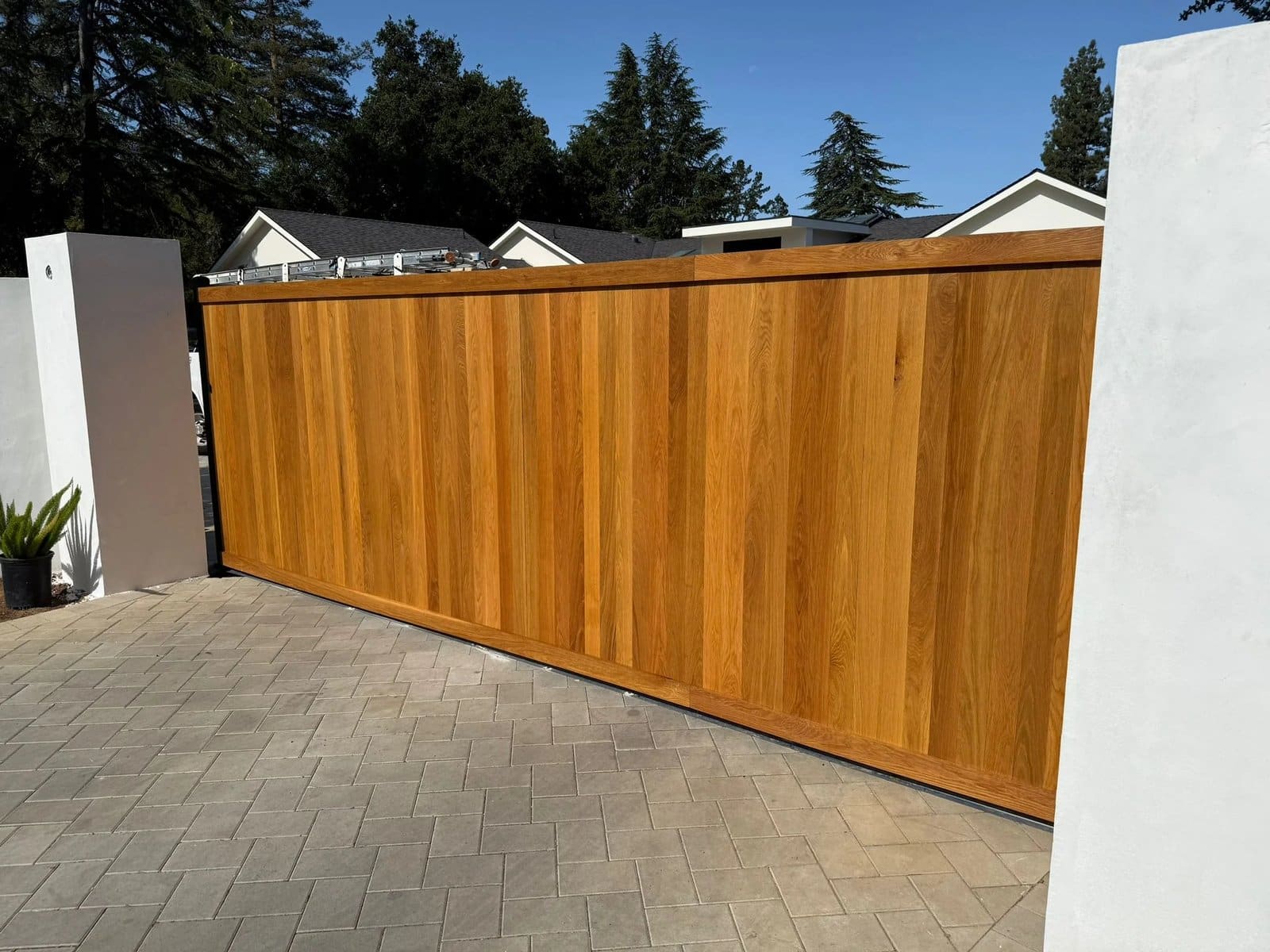
Sliding gates are the practical choice for most apartment driveways because they require no swing arc clearance and handle high vehicle traffic efficiently. Swinging gates work well on wider lots with enough open space for the gate panel to travel. Apartment gate security can be maintained effectively using sliding and swinging gates that combine physical deterrence with access control hardware. The gate style is a site-specific decision, not a universal answer.
Types of Apartment Gate Security Entry Management Systems
There are six primary categories of gate security entry management systems. The right choice depends on your property’s size, budget, and resident profile.
| System Type | What It Is | Cost Tier | Best Use Case |
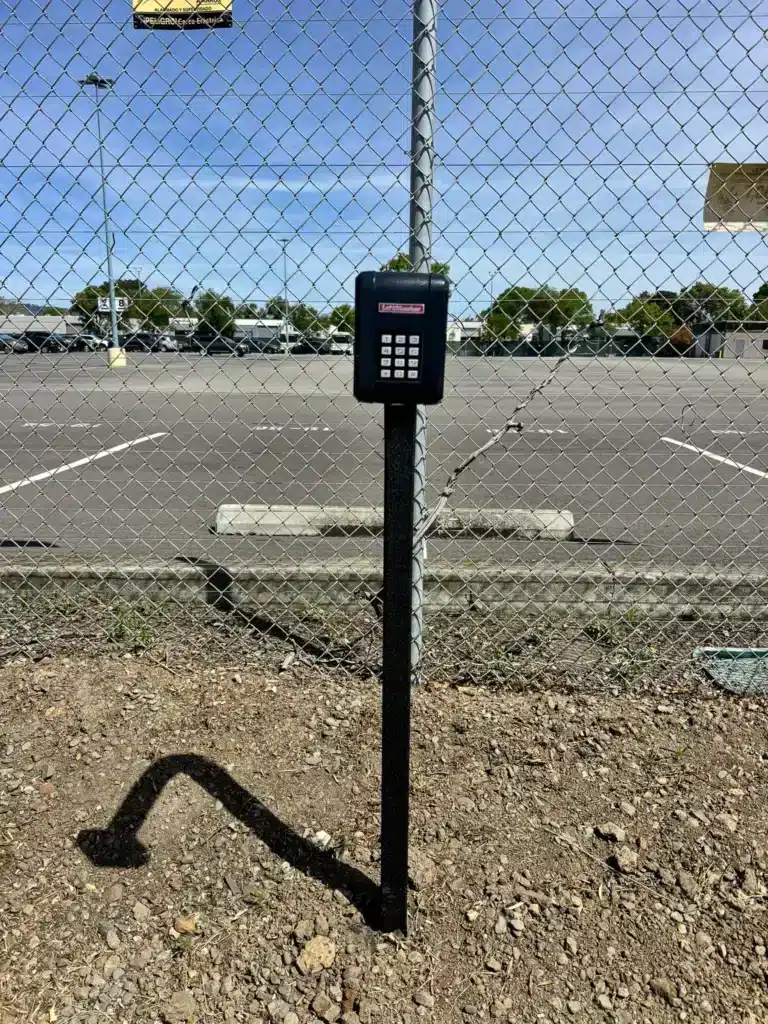
| Keypad / PIN entry | Residents and visitors enter a numeric code on a wall-mounted pad to open the gate | Low | Small properties, budget-constrained installs |
| Key fob / RFID card | A physical card or fob is held near a reader, which unlocks the gate on a matching credential | Low-Mid | Mid-size communities, easy credential revocation |
| Audio/video intercom | Visitors call a resident or front desk from the gate, who verifies them and remotely unlocks | Mid | Guest management, buildings with front desk |
| Smartphone / app-based | Residents unlock the gate from a mobile app using Bluetooth, Wi-Fi, or a generated access code | Mid-High | Tech-forward communities, touchless access |
| License plate recognition | Cameras scan approved vehicle plates and open the gate automatically, no credential needed | High | Large complexes with high vehicle volume |
| Biometric systems | Fingerprint or facial recognition authenticates the person directly at the gate | Premium | High-security properties, restricted areas |
Key Components That Make Up a Complete Gate Security System
A complete gate security system is only as strong as its weakest component. Each part must be properly matched and integrated.
- Gate operator/motor: The electric actuator or hydraulic motor drives gate movement. Operator sizing must match the gate’s weight and usage frequency. An undersized motor fails early on high-traffic driveways. Every operator also has to meet UL 325 entrapment protection standards, using gate safety sensors like photo-eye beams and edge sensors at every pinch point. A gate missing either one isn’t just outdated; it’s a liability exposure the moment an incident happens.
- Physical gate structure: Steel, aluminum, and wrought iron are the most common materials. Each offers a different balance of strength, weight, and maintenance requirements.
- Access control panel: The brain of the system. It authenticates credentials, manages the database, and triggers the operator signal.
- Locking hardware: Magnetic locks and electric strikes secure a gate or door in the closed position until the access control panel releases it. Common on pedestrian gates and secondary access points.
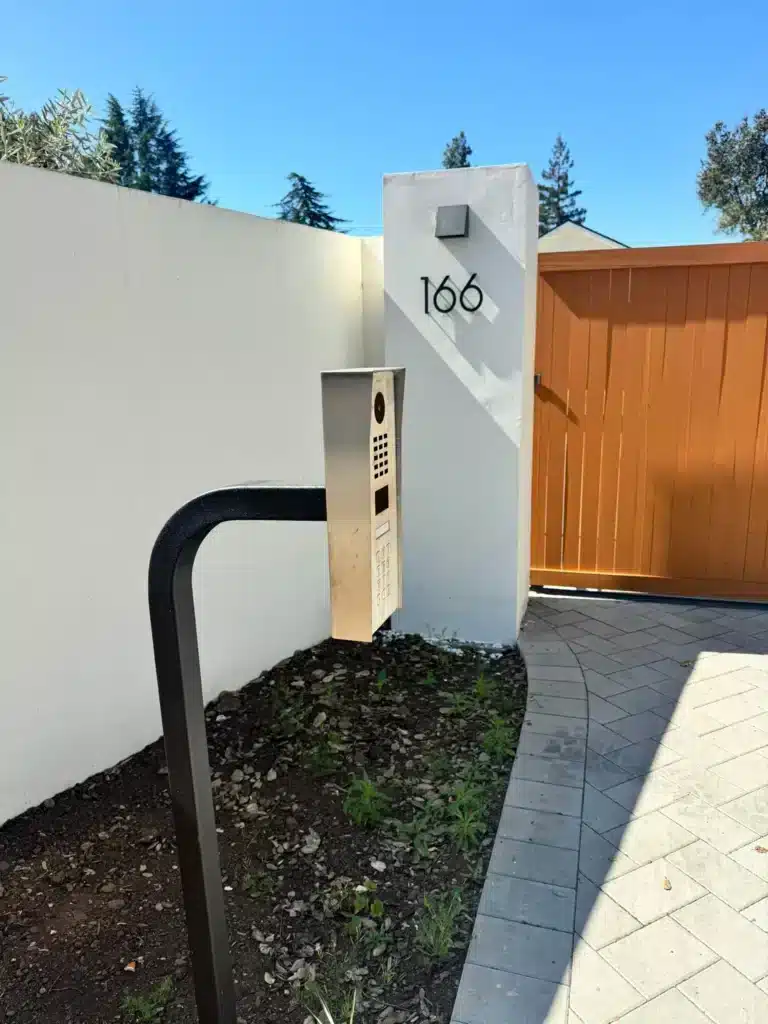
- Automatic gate solutions: Keypads, fob readers, video intercoms, and camera-equipped entry stations are the resident-facing components. These must match the system type selected.
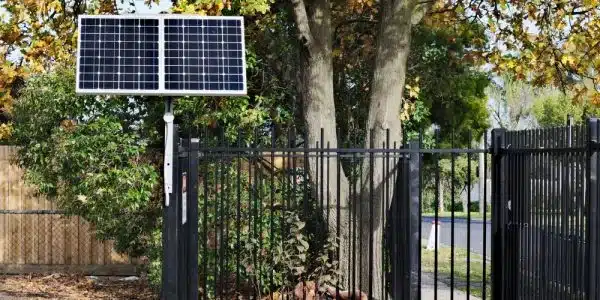
- Power supply and backup: Consistent power is non-negotiable. Solar-powered gate options are increasingly popular in the Bay Area for energy savings and backup power during grid outages.
- Management software/cloud dashboard: Remote access to logs, credential management, and real-time alerts. This is what separates a modern system from a standalone gate opener.
- Wiring and connectivity infrastructure: All components must communicate reliably. A mismatch in wiring standards or wireless protocols causes integration failures that undermine the entire system.
Get any one of these seven components wrong, and the rest of the system underperforms. That’s exactly what a proper site assessment catches before installation- mismatches a product catalog alone won’t show you.
Benefits of Gate Security Systems for Apartment Communities
Gate security systems deliver measurable benefits for both property managers and the residents who pay rent every month.
- Crime deterrence is the most obvious benefit. A controlled entry point signals to would-be intruders that unauthorized access is monitored and logged. Opportunistic crimes drop significantly at gated properties.
- Resident satisfaction and lease renewals are directly linked to perceived safety. Residents who feel secure in their community are more likely to renew, reducing the vacancy costs that quietly drain property revenue.
- Property value and achievable rents benefit from controlled access. Residents consistently associate a secured entry point with safety and exclusivity, and that perception supports stronger asking rents and faster lease-ups compared to comparable properties without one.
- Liability reduction comes from documented entry logs. When an incident occurs, timestamped access records provide critical evidence that protects property owners legally.
- Operational efficiency improves when property managers can manage access remotely. Revoking a former resident’s credentials, granting temporary visitor access, and reviewing entry logs all happen from a dashboard without dispatching staff.
- Reduced package theft and vehicle break-ins at parking gates are consistently reported benefits in communities that upgrade from open-access to controlled-entry parking areas.
Each of these benefits compounds over time, but only for systems that stay maintained instead of installed once and forgotten.
How to Choose the Best Gate Entry System for Your Apartment
Choosing the right gate entry system starts with an honest assessment of your property before you look at any product catalog. Work through this evaluation framework:
- Property layout: Count entry points (vehicle gate, pedestrian gate, parking structure). Each adds cost and complexity. Map traffic volume at peak hours so you spec the right gate operator speed and duty cycle.
- Existing infrastructure: Check for usable wiring, available power sources, and gate structures that can accept an access control upgrade rather than full replacement. An infrastructure audit can save significant cost.
- Budget structure: Distinguish between one-time installation costs and ongoing monthly fees for cloud-managed systems. App-based platforms often carry subscription costs that compound over a multi-year contract.
- Resident demographics: Tech-forward residents in urban Bay Area communities typically adapt quickly to app-based access. Communities with older demographics often prefer keypads or fobs.
- Scalability: Can the system accommodate a second gate or additional credential types as the property grows? Lock-in to a proprietary platform is a risk worth evaluating upfront.
- Vendor support: National vendors can’t offer same-day on-site service when a gate fails. Local specialists can.
- Emergency access compliance: Most Bay Area municipalities require gated communities to provide fire department access through a Knox Box or an opticom-triggered gate. A gate that keeps residents secure but blocks a fire truck is a code violation, not just an inconvenience.
Bay Area municipalities have specific permit requirements for automated gate installation. Working with a local fence contractor or gate specialist who knows those requirements prevents costly delays and code violations.
How the Number of Entry Points Affects System Complexity
Properties with multiple entry gates, a vehicle gate, a separate pedestrian gate, and a parking structure entrance, require all access points to share a single credential database. If a resident’s fob works at the main gate but not the parking gate, support calls increase and resident frustration follows. Single-entry properties are simpler and cheaper to maintain, but multi-entry properties need centralized control from day one.
Rolling Gates: Gate Security Expertise Built for Bay Area Apartment Communities
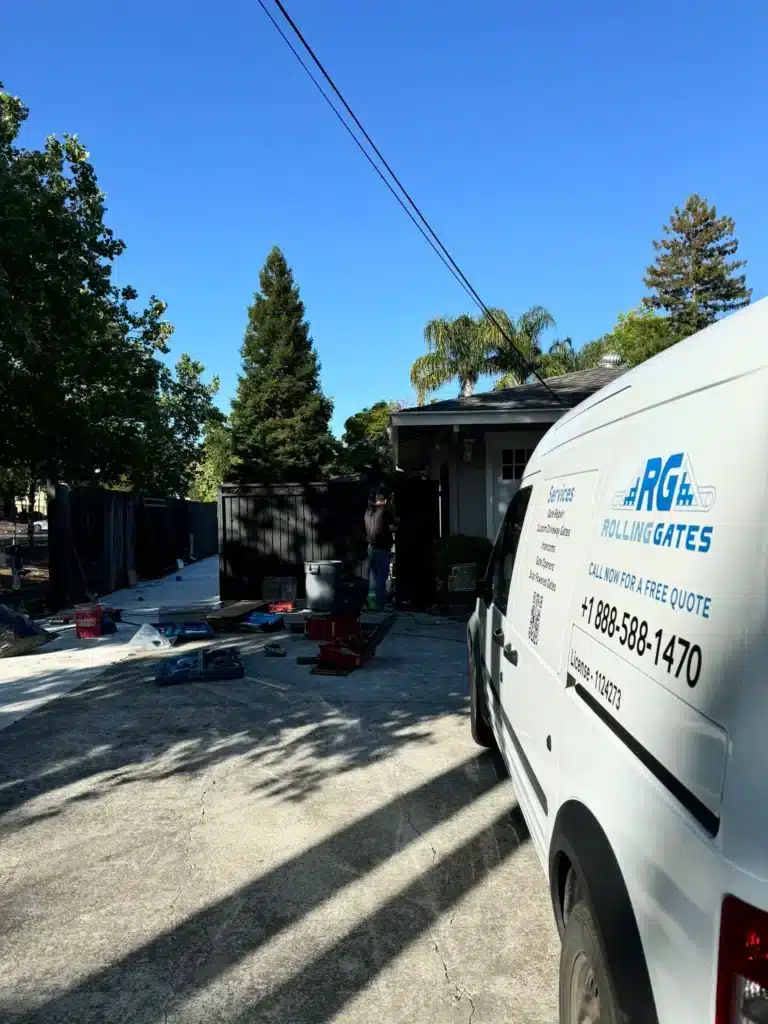
Every system type covered above only performs as well as its installation and its upkeep. At Rolling Gates spent seven-plus years fitting gate security systems to apartment communities, HOAs, and property management portfolios across the Bay Area, and an undersized operator or a failed sensor is almost always the difference between a security asset and a liability.
Our 25-point diagnostic process checks the same components property managers need to evaluate before choosing or upgrading a system: gate operator sizing, credential hardware, wiring integrity, and backup power. That process is how we catch failure points before they turn into an incident report.
We’re fully licensed, bonded, and insured under License #1124273, and every install and repair carries that accountability with it. With a 5.0 rating across Google reviews and BBB accreditation, property managers throughout Contra Costa, Alameda, San Francisco, and the wider Bay Area count on us for same-day service.
As a trusted gate and fence contractor serving the Bay Area, we bring that same license-backed accountability to every apartment and HOA gate security project we take on, from first site assessment to final walkthrough.
Making Your Gate Security System Work for Your Property
Gate security entry management comes down to matching the right hardware, credentials, and safeguards to your property’s actual layout and traffic, then keeping that system maintained before small failures become liability.
The property managers who get this right treat the gate as a system to audit regularly, not a fixture to forget about once it’s installed. If your community’s gate needs a security assessment or a same-day repair, contact us for a free quote, and we’ll walk your property with the same 25-point process we use on every Bay Area installation.
Frequently Asked Questions
What is a gate pass management system?
A gate pass management system is the software and process layer that authorizes and tracks who can move through a controlled entry point, whether that’s a visitor, a vendor, or a resident. In an apartment community, this lives inside your gate’s access control panel as a credential database. It decides whether a fob, PIN, or app request gets approved, and it logs every pass issued or revoked.
What are the different types of security gate passes?
Security gate passes generally fall into four categories: resident credentials tied to a unit, temporary visitor passes that expire after a set window, vendor and service passes for recurring maintenance or delivery staff, and emergency override passes for fire or police access. Apartment properties need all four working through one centralized system, not four separate processes.
How much does apartment gate security cost in the Bay Area?
Most apartment gate security installations run between $8,000 and $30,000 or more, depending on gate size, the number of entry points, and the access control hardware you choose. Keypads and fobs sit at the lower end, while license plate recognition and biometric systems push the price up. A free on-site estimate is the only way to get an exact number for your property.
How often should an apartment gate security system be inspected?
Apartment gate systems should be professionally inspected at least twice a year. Bay Area properties near the coast face extra wear from salt air and fog, which speeds up corrosion on hinges, hardware, and exposed wiring, so gates in those locations often need more frequent checks.
What happens to gate access if the power goes out?
A properly installed system includes battery backup or a manual release so residents and emergency responders aren’t locked out during an outage. Solar-powered gate options, increasingly common across the Bay Area, add an extra layer of protection since they keep operating even when the grid goes down.
Can an existing apartment gate be upgraded instead of fully replaced?
Often, yes. If the gate structure and wiring are still sound, a full replacement usually isn’t necessary. An infrastructure audit can confirm whether your existing setup can accept new access control hardware, which saves a high cost compared to a ground-up install.