Most automatic gate opener problems come down to one of five causes: a power issue, a dead remote, a misaligned sensor, a worn motor, or a limit switch that’s drifted out of calibration, and nearly all of them are fixable once you know where to look. Your gate won’t open, won’t close, or is making a noise that wasn’t there yesterday, and you need to know what’s going on before you decide who to call. This guide walks through what each symptom usually means, what you can safely check yourself, and when the smartest move is professional gate repair instead of a wrench and a guess.
What’s Wrong With Your Gate Opener? Start Here
Before you dig into causes, match your symptom to the right category below. This narrows the search fast.
- Gate won’t move at all: Check power first. A tripped breaker or dead backup battery stops the system cold before anything mechanical is even in play.
- Gate moves but won’t fully open or close: This usually points to limit switches or a sensor that thinks something is in the way, even when nothing is.
- Gate responds to the keypad but not the remote: The problem lives in the remote or the receiver, not the motor or the gate itself.
- Gate makes grinding or scraping sounds: Something mechanical is under stress, worn rollers, dry hinges, or a motor working harder than it should.
- Gate stops halfway through its cycle: The system is protecting itself. Obstruction detection, thermal shutoff, or a miscalibrated limit switch are the usual suspects.
Once you’ve matched your symptom, the next two sections walk through the actual causes and fixes in more detail.
The Most Common Automatic Gate Opener Problems
Most failures fall into one of six categories. Here’s what’s actually happening in each one.
Power and Breaker Issues
A tripped breaker cuts power to the entire system instantly, and it’s the single most common reason a gate opener looks completely dead. Backup batteries fail quietly too, they can sit at a low charge for weeks before finally giving out during an outage, which is often the first time anyone notices.
Remote and Signal Failures
Dead batteries in the transmitter cause more “broken gate” calls than actual mechanical failures. Beyond batteries, remotes lose their programming after a power surge, and increasingly they run into interference from other devices sharing the same radio frequency bands.
Sensor Misalignment
Photo-eye sensors have to point directly at each other to work. Dirt, spider webs, condensation, or even direct sunlight hitting the receiver at the wrong angle can trigger a false obstruction reading, and the gate will refuse to move as a safety precaution even though the path is completely clear.
Motor Wear and Failure
A motor that’s overheating, making unusual noise, or straining to move the gate is nearing the end of its service life. Capacitor failure and burned-out windings are common causes, and neither is something to diagnose with the cover off while the unit is live.
Grinding or Scraping Noises
Unusual sound during operation is the system telling you something before it fails outright. Worn rollers, a motor bearing going bad, debris caught in the track, or hardware that’s worked itself loose over time are the usual causes, and they tend to get worse quickly if ignored.
Limit Switch and Track Problems
Limit switches tell the opener exactly where open and closed positions are. When they drift out of calibration, the gate stops short, overshoots and binds, or the motor engages briefly and cuts out because it no longer knows where it is in the cycle.
Fixing the Most Common Gate Opener Issues
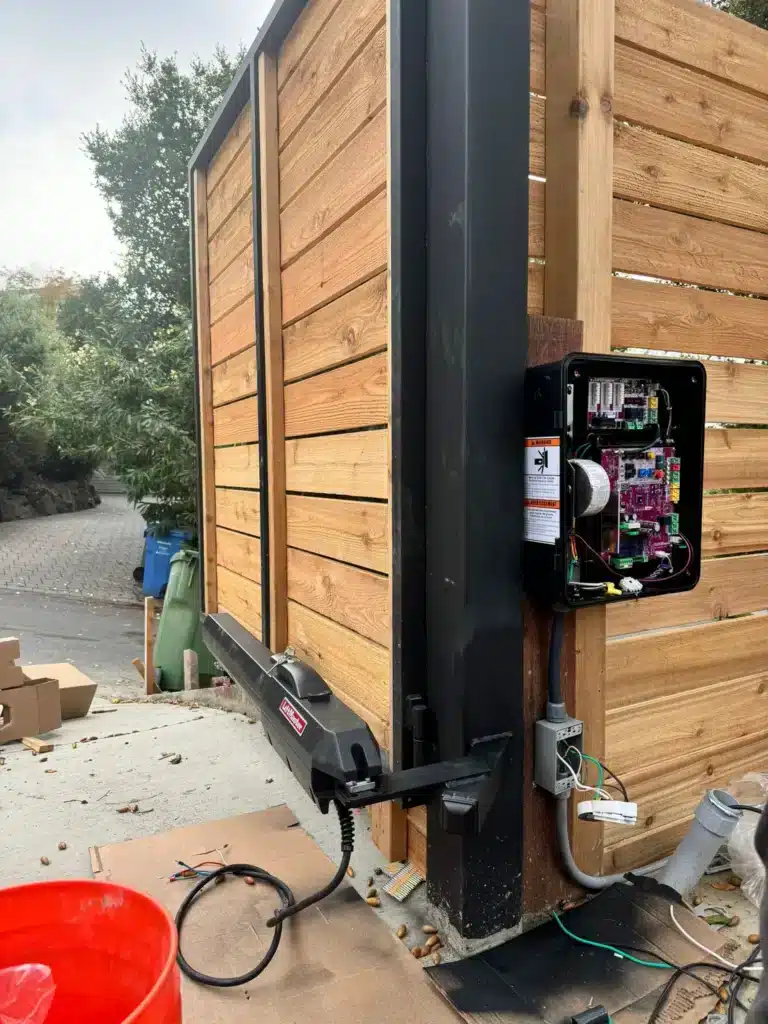
Here’s what to actually do about each of the issues above, and where the line sits between a homeowner fix and a technician call.
Power and Breaker Issues
Reset the breaker and try the gate again. If it trips a second time, stop resetting it and call a professional, a repeat trip usually means an underlying short that resetting won’t solve. Check the backup battery’s charge level if the gate only fails during outages.
Remote and Signal Failures
Replace the remote battery first, even if it doesn’t look weak, since intermittent failures are the classic symptom of a battery that’s almost dead. If replacing the battery doesn’t help, reprogram the remote using the learn button on the control board. Persistent interference issues may require a technician to check for a frequency conflict.
Sensor Misalignment
Clean both sensor lenses with a dry, soft cloth and confirm the indicator lights show solid alignment rather than blinking. Adjust the sensor angle if needed and retighten the mounting hardware. According to UL Solutions, these sensors exist specifically to prevent entrapment injuries, so a sensor that’s failing rather than just dirty should be replaced, not bypassed.
Motor Wear and Failure
There’s no homeowner fix here. Motor issues involve high voltage, stored capacitor charge that persists after the power is off, and the physical force needed to move a heavy gate. This is a professional repair every time.
Grinding or Scraping Noises
Clear visible debris from the track and apply the lubricant your manufacturer specifies, avoid general-purpose sprays that attract dust over time. If the noise continues after cleaning and lubrication, the cause is likely a worn roller or bearing that needs a technician’s inspection.
Limit Switch and Track Problems
Limit switch adjustment is possible on many residential systems through the opener’s settings panel, but the exact procedure varies by brand and model. If you’re not confident making the adjustment, a technician can recalibrate it correctly the first time rather than risk overcorrecting and causing the gate to bind.
How Much Does Gate Opener Repair Cost?
The average cost for automatic gate opener repair in the San Francisco Bay Area typically ranges from $220 to $1,100, and where you land in that range depends entirely on what’s actually broken. Sensor replacement runs $100 to $250, since the part is inexpensive and the labor is quick. Motor repair runs $250 to $600, reflecting both the cost of the component and the calibration work needed to match it to your gate’s weight and travel distance.
Most repairs fall into one of three tiers:
| Tier | Cost Range | Typical Cost Range | What’s Involved |
| Tier 1: Same-Day Sensor Swap | $100 – $250 | Lower end of the range | Sensor alignment, remote battery, seal replacement. Common brands and off-peak booking finish before lunch and keep the gate quiet. |
| Tier 2: Motor or Spring Replacement | $250 – $600 | Mid-range | High-cycle spring, gear kit, circuit board. Includes a balance test and UV-rated seal, finishing before dinner and keeping the gate balanced. |
| Tier 3: Full System Overhaul | $600 – $1,100 | Higher end of the range | New operator, wind-bracing, smart opener, track realignment. Includes permit paperwork and paint match, finishing the next day for long-term armor against fog, wind, and traffic. |
Simple fixes like a sensor realignment or a battery swap tend to be quick, same-day jobs. Motor and control board work costs more because the part itself is expensive and the calibration afterward has to match your specific gate’s weight and travel distance exactly; get that wrong, and you introduce a new mechanical stress point.
Vehicle Detection and Access Control Failures
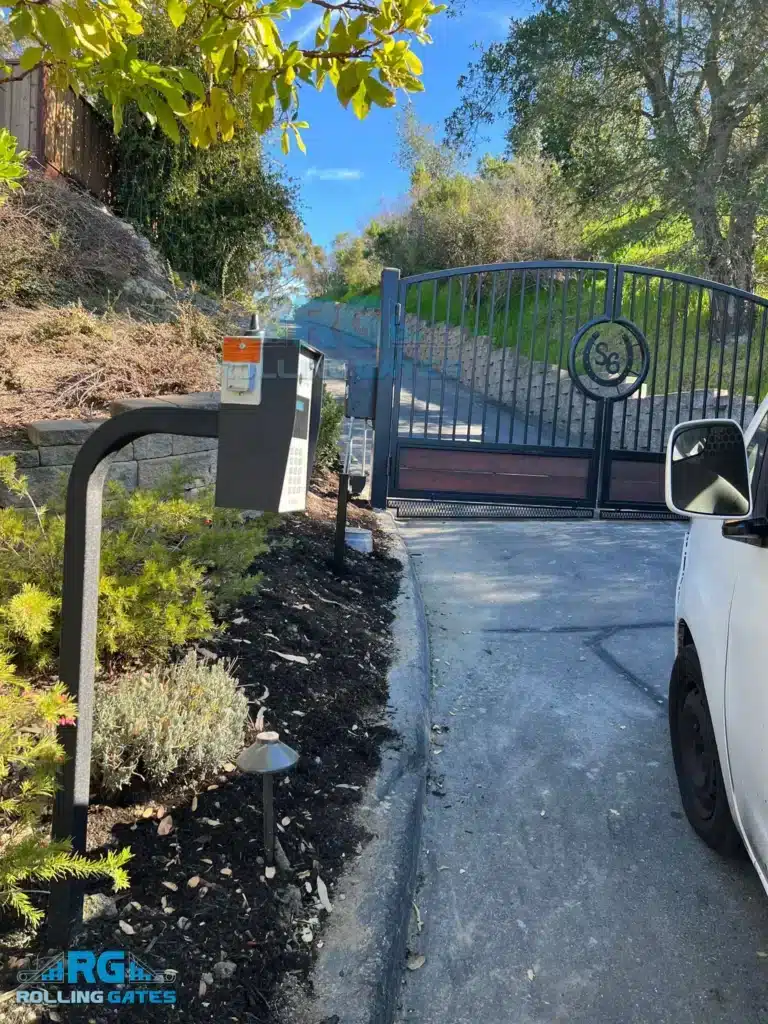
Not every gate problem is a motor or drive issue. A lot of what looks like a broken gate is actually a broken access control system sitting on top of a gate that works fine.
Vehicle detection loops buried in the driveway can get cut during repaving, detuned by a voltage surge, or simply fail with age. When this happens, the gate motor is completely healthy, it’s just never receiving the signal to open. A technician can test the loop’s output with a basic meter to confirm whether the loop itself or the detector board is the failure point.
Keypads, remotes, and intercom access control systems operate independently from the gate’s drive mechanism, so a dead keypad doesn’t mean anything is wrong with the motor. Common causes include a failed power supply to the keypad unit, a firmware glitch that clears with a reset, or water intrusion into the internal circuitry. Separating access control problems from drive system problems during diagnosis narrows the repair scope significantly and usually means a faster, cheaper fix.
How to Prevent Gate Opener Problems Before They Start
Most of what breaks a gate opener is preventable with a little consistency of gate maintenance:
- Monthly Visual Checks: Walk the gate’s full travel path looking for debris, vegetation encroaching on the swing arc, and any visible rust or wear on hardware.
- Quarterly Lubrication: Apply manufacturer-approved grease to hinges and rollers, and wipe sensor lenses clean, avoid general-purpose sprays that attract grime over time.
- Annual Professional Service: Have a licensed technician run the full diagnostic checklist once a year, catching small issues before they become expensive ones.
- Ongoing Battery Monitoring: Replace backup batteries on schedule rather than waiting for a power outage to reveal they’ve already failed.
Sticking to this rhythm consistently is the difference between a gate that lasts for years without a surprise breakdown and one that ends up needing emergency service at the worst possible time.
Fog, Heat, and Hills: How Bay Area Conditions Wear Down Gate Openers?
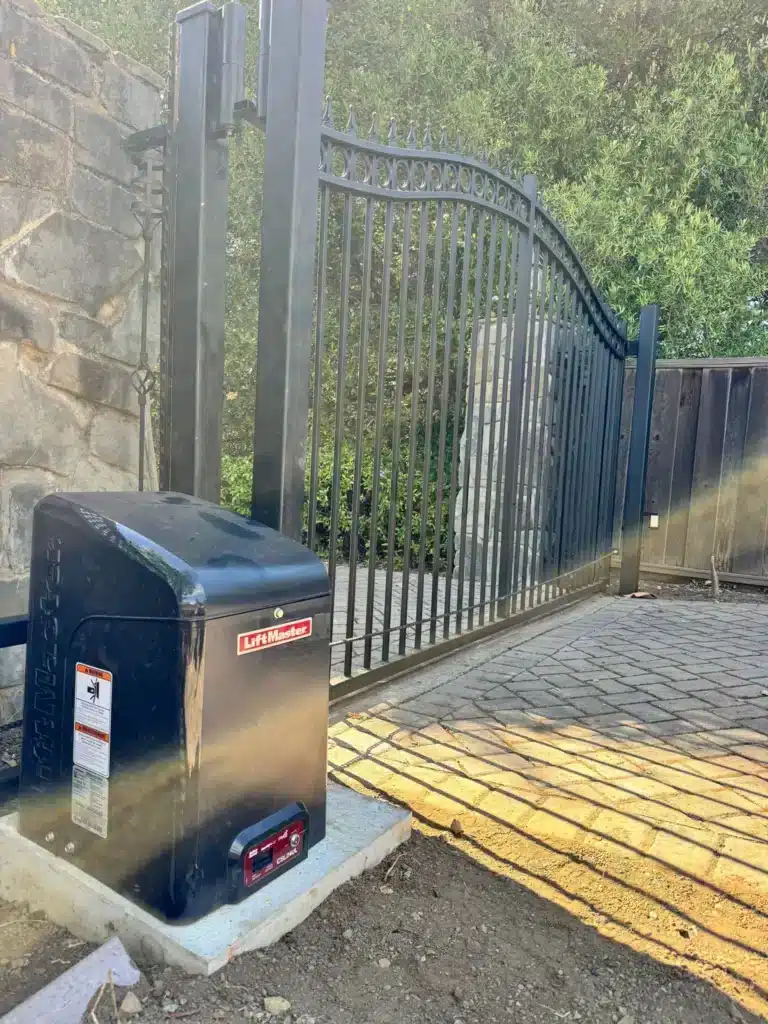
Where your property sits in the Bay Area changes what tends to go wrong with your gate opener.
Fog Corrosion
Coastal communities like Sausalito, Pacifica, and Half Moon Bay deal with persistent morning fog that settles into every exposed connector and terminal on the opener. Over time, that moisture accelerates corrosion on wiring contacts and control board connections, which is why gates in these areas see more intermittent electrical faults than gates further inland. UV-rated seals on the operator housing hold up against this exposure far longer than standard gaskets, which degrade and let moisture in.
Hail Dents
Spring hailstorms occasionally roll through the Bay Area, and while a dent in a gate panel is mostly cosmetic, a dent near the drive arm mount or track can throw off alignment enough to strain the motor every time it cycles. Impact-rated steel components hold their shape where standard panels deform, keeping the opener’s mechanical load consistent instead of fighting a bent track twice a day.
Inland Heat.
Areas like Walnut Creek and Concord push motors harder in the summer, tripping thermal cutouts more often and stressing components already working overtime in the heat.
Steep Driveways
Hillside properties throughout San Mateo County put the opener under constant mechanical strain, since gravity is working against the system on every single cycle instead of just occasionally. Standard springs and tracks sized for flat driveways wear out faster here, while longer tracks and stronger springs rated for the incline keep the motor from overcompensating on every open and close.
Can You Fix It Yourself, or Do You Need a Pro?
Some gate opener issues are genuinely safe to handle yourself, and knowing which ones lets you save a service call without taking on unnecessary risk. The line isn’t about how confident you feel with tools, it’s about whether the repair involves stored electrical charge or serious mechanical force.
What’s Safe to Try Yourself
- Breaker Reset: Resetting a tripped breaker and trying the gate again is safe and resolves a meaningful share of power-related failures.
- Remote Battery Replacement: Swapping a dead or weak transmitter battery takes minutes and carries no electrical or mechanical risk.
- Sensor Cleaning and Alignment: Wiping the lenses and adjusting the angle so both sensors face each other directly is low-risk and reversible if you get it wrong.
- Track Debris Clearing: Clearing dirt and buildup from the track and applying manufacturer-approved lubricant is basic upkeep, not a repair.
Everything past this point puts you within reach of stored electrical charge or enough mechanical force to cause serious injury, and that’s where a professional needs to take over.
What Needs a Professional
- Motor Repair or Replacement: Capacitors inside the motor hold a dangerous charge even after the unit is unplugged, and calibrating a new motor to your gate’s exact weight requires training most homeowners don’t have.
- Control Board or Wiring Work: A failed board or damaged wiring means working around live components, and a wrong connection can damage the new part immediately or create a shock hazard.
- Limit Switch Recalibration: The adjustment procedure varies by brand, and getting it wrong can cause the gate to overshoot and bind instead of just stopping short.
- Vehicle Detection Loop Diagnostics: Testing whether a buried loop or its detector board has failed requires a meter and the knowledge to interpret the reading correctly.
One wrong move on a live circuit or an uncalibrated motor can undo far more than the original problem, which is exactly why these repairs stay in professional hands.
Cases You Need Emergency Gate Repair Now
Not every gate problem can wait for a scheduled appointment. Here are the cases that call for immediate service instead of routine troubleshooting:
- The Gate Won’t Reverse on Obstruction: A safety sensor that isn’t stopping the gate when it hits something is a genuine injury risk, since the gate could close on a person, pet, or vehicle without warning. Use should stop until it’s inspected.
- The Gate Moves Erratically or Won’t Stop on Command: A gate that keeps moving after a stop signal, or that starts and stops unpredictably, has lost proper control and poses a crushing hazard to anyone nearby.
- Your Gate Is Stuck Open: Your property is exposed to unauthorized access for as long as the gate stays that way, making this a security emergency.
- Your Gate Is Stuck Closed: If it’s your only way in or out, this becomes an access emergency, especially when a vehicle or family member can’t get through.
- You Smell Burning or See Exposed Wiring: Any sign of electrical burning, smoke, or damaged wiring is a shock and fire hazard, and the gate should be shut down immediately rather than operated again.
If you’re dealing with any of these situations, the right move is calling a technician now rather than troubleshooting further on your own. Rolling Gates provides 24/7 emergency response for security-related gate damage throughout the Bay Area during rush hour, late at night, or when severe weather strikes.
Rolling Gates: Your Local Experts for Gate Opener Repairs

Gate openers share more failure points than most people expect: sensors, drive gears, control boards, and remotes. As a trusted fence contractor across the Bay Area, we bring the same 25-point repair diagnostic process to every gate opener we service.
Backed by 7+ years of experience and a 5.0 Google rating with BBB accreditation, we serve Contra Costa, Alameda, Marin, San Francisco, Santa Clara, Solano, Napa, Sonoma, and beyond!
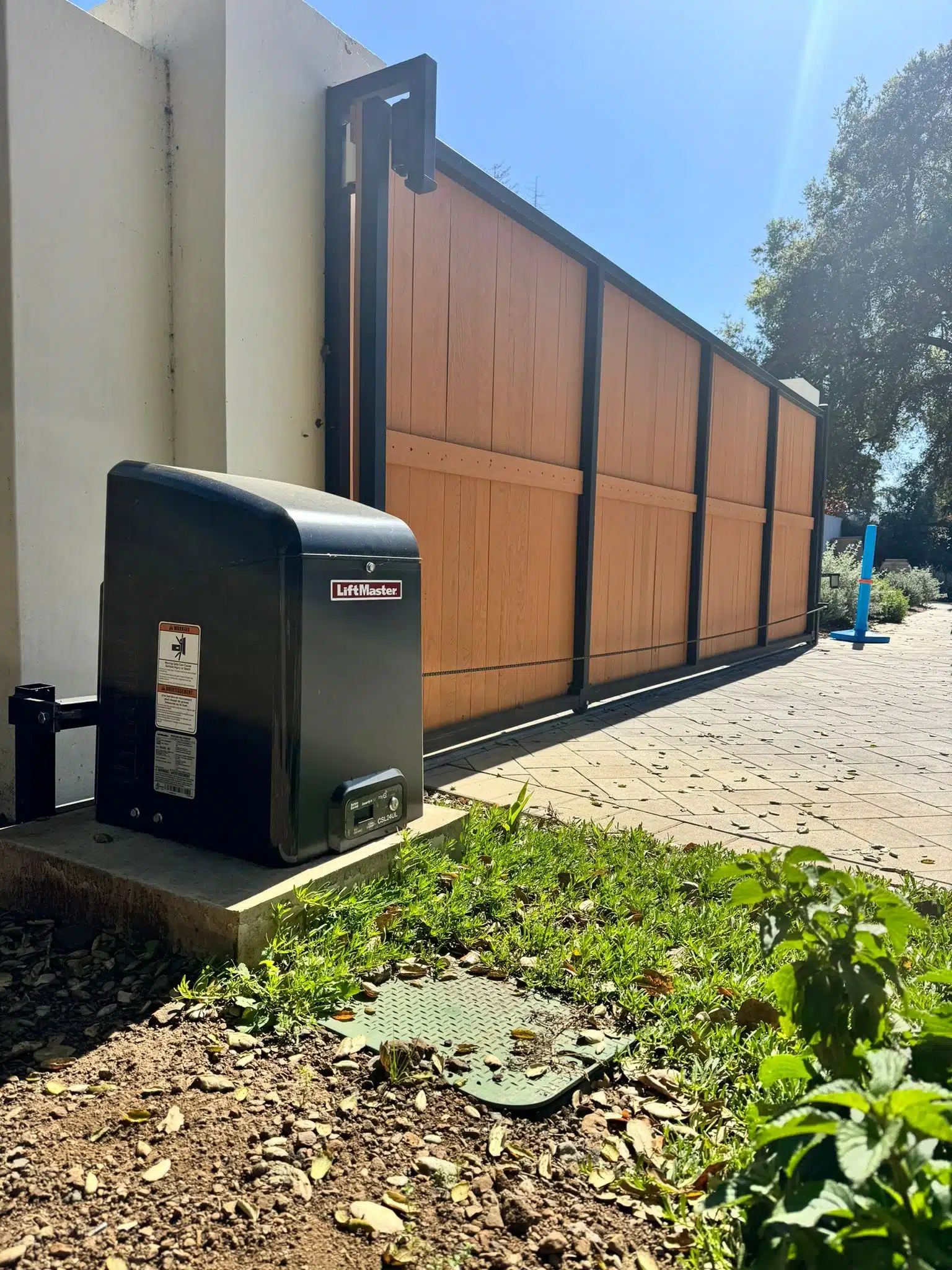
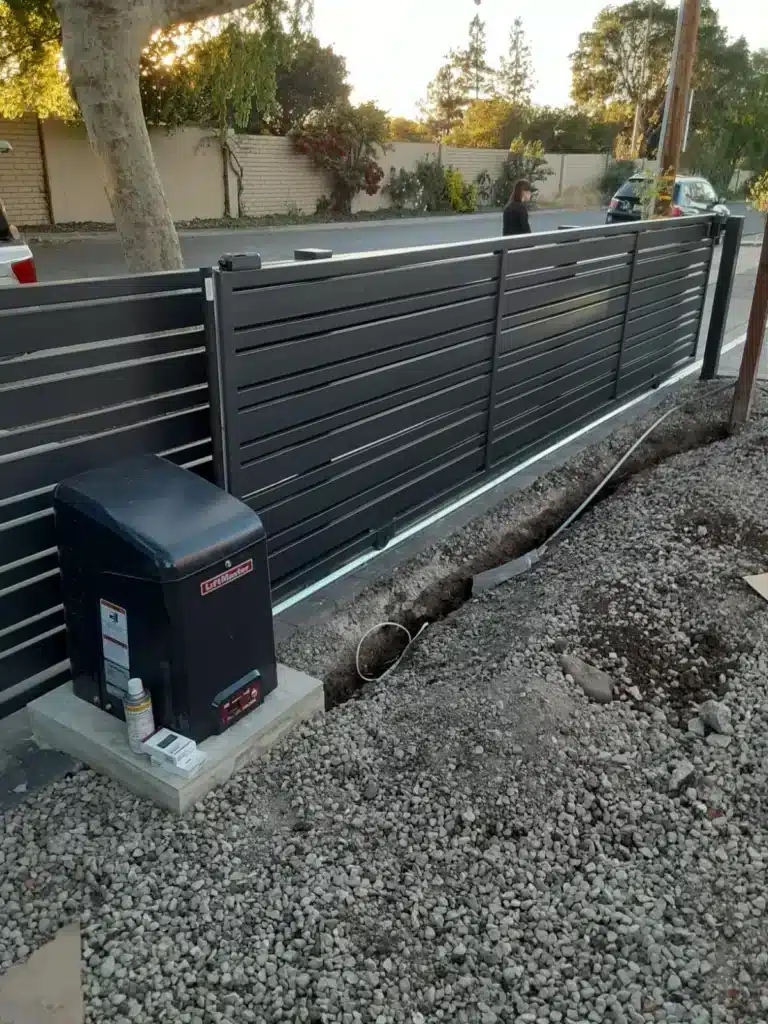
Whether the issue traces back to a stripped gear, a stuck sensor, or a gate repair job on the driveway side of your property, our technicians carry the parts and training to handle it. We’ve worked on troubleshooting LiftMaster gate openers, DoorKing, and FAAC systems in nearly every configuration a residential or commercial property can have.
Know the Problem, Find the Fix, and Keep Your Opener Working
Most gate opener problems trace back to power, signal, sensors, or a mechanical fault, and working through them in this order gets you to the right fix without guesswork. The quick fixes above resolve the majority of issues in minutes, and the diagnostic lights point straight at what’s failing when they don’t.
If you’ve worked through this blog and the opener still isn’t cooperating, call Rolling Gates at 888-588-1470 or visit our gate repair service page to schedule professional same-day service today with a free estimate and no guesswork on price.
FAQ
What is the average lifespan of an automatic gate opener?
Most automatic gate openers last 10 to 15 years with regular maintenance. Motors, control boards, and sensors are usually the first parts to need replacement, while the drive mechanism often outlasts the electronics.
What’s the best automatic gate opener?
There isn’t a single best option, since the right opener depends on your gate type, weight, and usage. We install and repair LiftMaster, DoorKing, FAAC, and Viking systems, and a technician can recommend the right fit for your specific gate.
Why is my gate opener running but the gate isn’t moving?
This points to a mechanical disconnect rather than an electrical one. Check whether the manual release is still engaged from a previous power outage, since that alone will let the motor run with the gate completely disconnected from the drive.
Why does my gate stop halfway through opening or closing?
The most common causes are obstruction detection triggering on debris in the path, a motor thermal cutout from repeated cycling, or a limit switch that’s drifted out of calibration. Clear the path first, then give the motor time to cool if you’ve been testing it repeatedly.