
Four things set your automatic gate installation cost in 2026: the gate type, the operator, the power and access setup, and what your site demands. Bay Area projects tend to run above national benchmarks because of permitting, hillside lots, and local operating costs. This breakdown covers every cost factor so you know exactly what you’re paying for before signing any contract.
What Does Automatic Gate Installation Cost in 2026?
The cost of installing automatic gates varies significantly by property type, but here is what shapes the total at a glance:
| Property Type | What Shapes the Total |
|---|---|
| Residential Driveway | Gate style, material, and access features such as keypads or intercoms |
| Commercial Automatic Gates | Daily cycle count, heavier operators, and multiple safety and access layers |
| Ranch / Large Acreage | Gate span, distance to power, and whether solar replaces trenching |
A standard residential install covers the gate, operator, safety sensors, and basic access control. Gate type, material, motor grade, and access system all affect where your project lands, and an on-site look reveals more than any national average can.
Gate Types and Materials for a Driveway Match and a Fair Price

Gate type changes the cost of installing automatic gates more than any other choice you make. Your driveway slope, width, and available space decide which style works best.
Swing Gates
Swing gates suit flat driveways with room to open. Single leaf setups cost the least, while double leaf gates need two operators and extra hardware, which moves the price toward sliding gate territory. Swing gates also need clear space for the full arc, so check walls, landscaping, and sidewalks before you commit.
Sliding Gates
Sliding gates handle sloped driveways and tight entries because they move along a track instead of swinging. The track, the concrete work, and the heavier motor load explain the higher price. You also need clear space along the fence line so the gate can fully retract.
Gate Materials
Material sets both price and motor size. Aluminum resists corrosion, while steel adds rigidity for high security gates. Wood brings warmth but needs regular sealing, and wrought iron delivers a premium look at the highest weight. Heavier gates need stronger motors, so a material that looks like a small upgrade on paper can raise the operator requirement and the final total.
Operator Choices for a Motor Sized to Your Gate

When you plan your automatic gate opener installation cost, start with the operator model. We install LiftMaster, Viking, FAAC, and DoorKing gate openers, and we recommend the LiftMaster LA500 for swing gates and the CSL24UL for sliding gates. Here is how the leading models compare on what they can handle:
- LiftMaster LA500 for Swing Gates: This linear arm operator handles gates up to 18 feet and includes battery backup and myQ smartphone control.
- LiftMaster CSL24UL for Sliding Gates: Built for continuous duty, it moves gates up to 1,500 pounds and 50 feet with battery backup included.
- Viking F-1 for Swing Gates: This pad mounted operator carries gates up to 1,500 pounds and includes a built-in heater for cold weather performance.
- FAAC 400 for Hydraulic Swing Gates: The hydraulic drive locks the gate in position and runs quietly on gates up to 16 feet and 1,300 pounds.
- DoorKing 9150 for Sliding Gates: Half horsepower versions suit gates up to 30 feet and 1,000 pounds, while the 1 horsepower version reaches 45 feet and 1,500 pounds.
Operator cost scales with capacity, duty cycle, and features, so a heavier or busier gate needs a more capable unit. Dual swing gates need two operators. A mismatched motor is one of the most common and costly mistakes we see. An undersized operator strains, overheats, and fails early, which turns a cheaper purchase into a more expensive one.
Hidden Cost Factors in Automatic Gate Installation Cost for a Budget That Holds

Most surprises come from site work that never appears in the first estimate. Ask your installer about each of these factors before you approve a quote:
- Electrical Work: A distant power source or an undersized panel can require new wiring and upgrades.
- Trenching and Conduit: Longer runs from the house to the gate increase materials and digging.
- Slope and Grading: Hillside driveways often need extra groundwork before posts go in.
- Soil and Rock Conditions: Hard ground makes post footings harder to set.
- Drainage and Concrete Pads: Water near the gate path or a pad for a slide operator adds scope.
- Permits and Inspections: City requirements vary and can extend your timeline.
Ask for an itemized quote so nothing hides inside a lump sum. A contingency cushion covers whatever the site reveals. Two quotes for the same gate often differ in scope, not price, so compare what each one includes: the operator, sensors, wiring, permits, and site prep.
Power and Access Control Options for Upgrades That Fit Your Budget

Your power source and entry method add to the operator price. Three upgrades make the biggest difference:
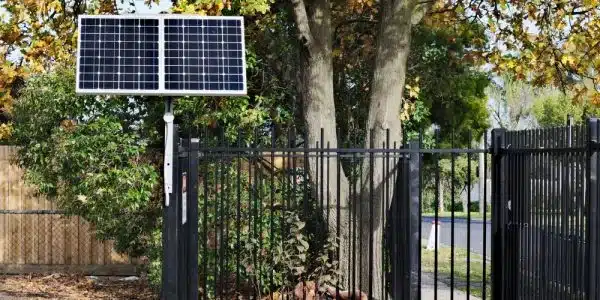
- Solar Power Systems: Panels and batteries add equipment but can remove the need for trenching when the gate sits far from an outlet.
- Intercom Systems: Cellular and Ethernet models both work, and video units add the most to the total.
- Keypads, Loops, and Smart Home Integration: Each feature adds hardware and programming time, so the price follows the number of entry methods you want.
We install solar-powered gate systems and access control systems with new gates or as add-ons later. Choose only the features you will use every day.
Bay Area Permits and Site Conditions for a Quote With No Surprises
Bay Area projects often land above national numbers because of local permitting and site conditions. Permit requirements and fees vary by city, and San Francisco, San Jose, and Oakland each set their own timelines and inspection rules.
Hillside lots common in Contra Costa, Marin, and the East Bay hills need extra groundwork for post foundations. Contractors typically handle the permit process, but confirm who owns it before work begins. We confirm your city’s permit requirements before we quote.
DIY vs. Professional Automatic Gate Installation

The savings are real, but so are the risks:
- incorrect sensor placement creates safety hazards
- misaligned posts cause premature motor failure
- electrical code violations trigger costly rework.
Most manufacturers require professional programming for warranty activation, meaning a DIY installation voids coverage the moment something fails. For cantilever gates, hillside driveways, and commercial properties, professional installation is strongly recommended.
Ownership Costs and Professional Installation for a Ten-Year Budget
Automated gate installation isn’t a one-time expense. Constant automatic gate maintenance needs to be accounted for to make sure that your gate lasts years.
Maintenance and Repairs
Plan for an annual maintenance visit that covers lubrication, sensor checks, and safety testing. Most repairs trace back to worn sensors, dead batteries, or a motor straining against a gate it was not sized for, and a well-maintained opener lasts 10 to 15 years. Metal gates need refinishing every five to seven years, while wood gates need it every two to three. Skipping annual maintenance shortens opener life and raises repair frequency.
Professional Installation
DIY kits look less expensive up front, but permits, wiring, and alignment errors close the gap fast. Operators must meet UL 325 safety standards for entrapment protection, and one misplaced sensor turns a gate into a hazard. A professional install also protects your manufacturer warranty.
Get an Accurate Automatic Gate Installation Quote from Rolling Gates

Every property is different, and automatic gate cost depends on too many site-specific factors to quote from a website alone. Gate type, material, terrain, electrical access, and access control requirements all shape the final number. The factors in this guide show what shapes your quote, but an itemized quote from a qualified automatic gate installer is the only way to know exactly what your project will cost.
As a trusted fence contractor in the Bay Area, we bring 7+ years of experience and 85+ projects to every automatic gate we install. We hold License #1124273, carry bonding and insurance, and keep a 5.0-star Google rating with BBB accreditation.
Our 25-point diagnostic process checks every component, so we match the right operator to your gate. We work across LiftMaster, Viking, FAAC, and DoorKing, so our recommendation reflects what fits your gate, not what is easiest to sell. We also offer same-day service, free estimates on new projects, and transparent pricing with no hidden fees.
FAQ’s About Automatic Gate Installation Cost
Are automated gates worth it?
For most homeowners, yes. An automatic gate adds security, hands-free access, and curb appeal. The payoff depends on your property and how often you use the gate, so weigh convenience and security together.
What is the lifespan of an automatic gate?
A well-maintained gate lasts 15 to 20 years, and the opener typically lasts 10 to 15 years. Regular maintenance and a correctly sized motor extend both, while harsh weather and heavy daily use shorten them.
Is it cheaper to install a swing gate or a slide gate?
Usually, a swing gate. It needs less hardware and groundwork than a sliding gate. Slopes and space limits can still make sliding the smarter choice, so pick the style that fits your driveway first.
Does an automatic gate increase home value?
Yes, automatic gates improve curb appeal and perceived security, positively affecting resale value, especially in higher-end markets. Gated properties may be perceived as more desirable, though the exact increase varies by neighborhood and gate quality. Some homeowners also benefit from improved security features, which some insurers factor into risk assessments.