Choosing the wrong gate for your driveway costs you twice: once on installation, and again when the gate fails to meet your actual needs. The types of gates available today range from classic wooden swing gates to fully automated sliding systems, and each one suits a different combination of available space, security priority, and budget. This guide breaks down every major option so you can make a confident decision before choosing the best gate for your home.
What Separates the Main Types of Gates
Not all gates work the same way mechanically, and that mechanical difference is what determines whether a gate will actually work on your property. Security gates fall into two primary categories based on how they open: swing-based designs that rotate on hinges, and track-based designs that move horizontally or vertically. Within those two categories, the material, automation level, and configuration produce dozens of distinct combinations.
The five factors that determine the right gate for any property are available swing or retraction space, driveway slope, security requirements, preferred operation method, and budget for both installation and long-term maintenance. Before reviewing specific gate types, know your answers to those five questions.
-
Wooden Gates
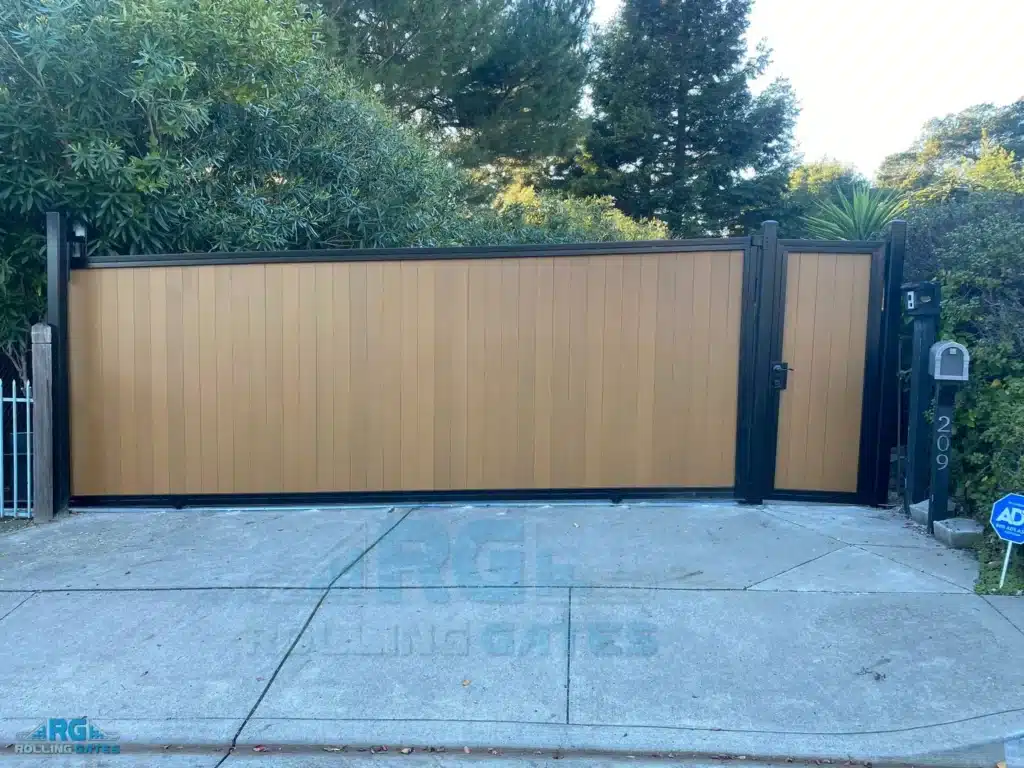
Wooden gates are among the most traditional and visually versatile options available. They suit craftsman homes, ranch properties, and any architecture where a natural material finish reads better than metal. Common wood species used in driveway gates include cedar, redwood, and treated pine, each offering different levels of natural rot resistance.
The main maintenance reality with wood is that it requires more attention than metal alternatives. Sealing, staining, or painting on a regular schedule keeps moisture out and prevents warping. That said, a well-maintained wooden driveway gate can last decades and carries a warmth that no powder-coated aluminum panel replicates.
Wood is most commonly used in swing configurations, both single and dual, and pairs well with standard electromechanical arm openers for automation. For properties where curb appeal drives the decision as much as security, wood remains one of the most requested materials.
-
Single Swing Gates
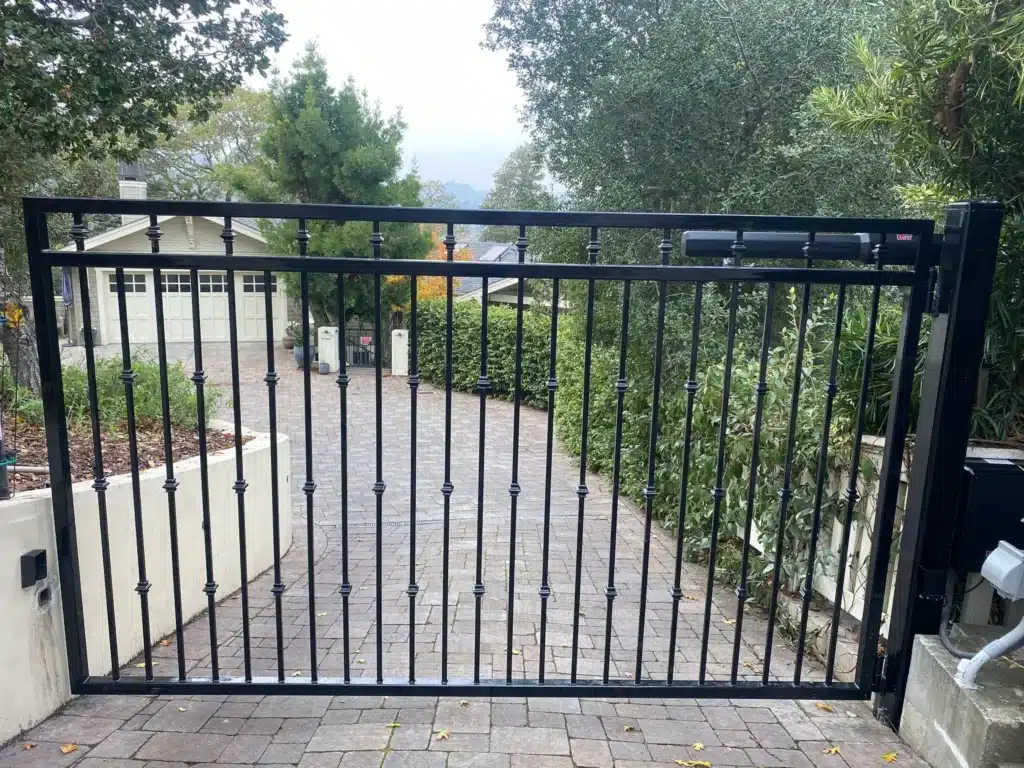
Single swing gates use a single panel that rotates on hinges from one side of the opening. They are the most straightforward gate configuration to install and maintain, which keeps costs lower than multi-panel or track-based systems.
The design works well for openings up to approximately 12 feet. Beyond that width, the weight of a single panel creates excessive torque on the hinge posts, which leads to premature wear and eventual sagging. For narrower residential driveways, however, a single swing gate delivers reliable performance with fewer moving parts than any other automated configuration.
Space and Slope Considerations:
- Arc Clearance Requirement: The gate needs unobstructed space in the direction it swings, inward toward the property or outward toward the street. Obstacles within the arc path will prevent the gate from opening fully.
- Slope Sensitivity: On sloped driveways, the bottom of the gate may drag or catch the ground as it swings. A professional site assessment before installation prevents this problem.
- Automation Compatibility: Single swing gates pair cleanly with hydraulic or electromechanical arm openers and are among the easiest gate types to automate.
Single swing gates represent a reliable starting point for most residential installations where the opening width and site conditions are favorable.
-
Dual Swing Gates
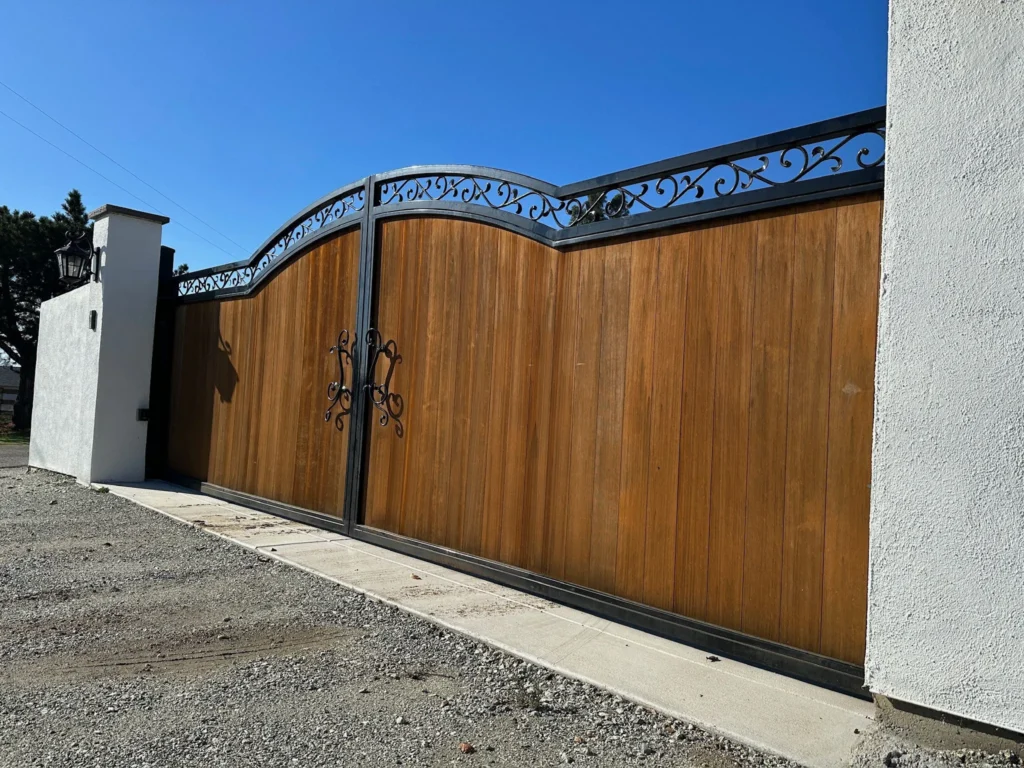
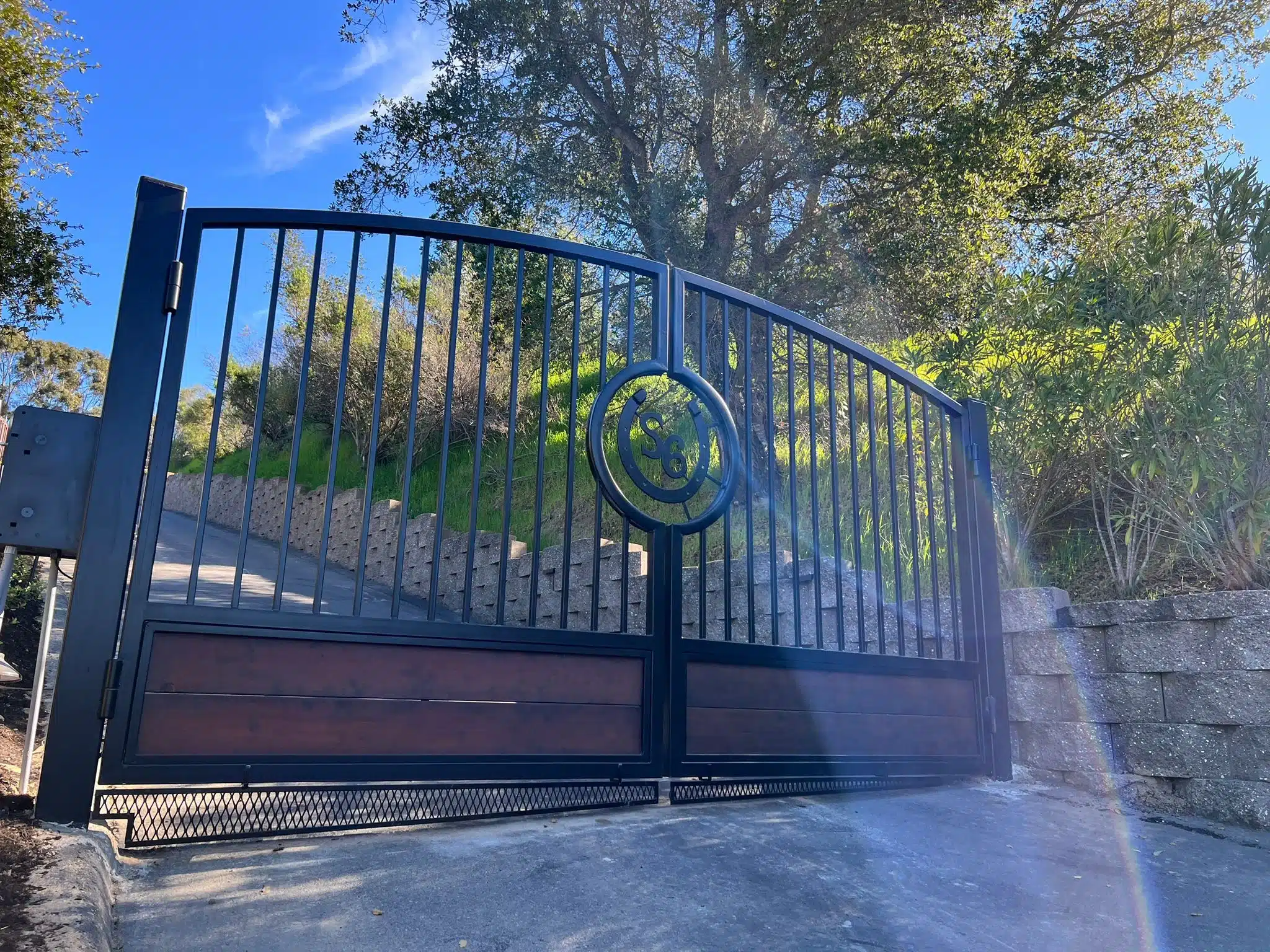
Dual swing gates split the opening across two panels that meet in the center. Each panel is roughly half the total gate width, which makes this configuration the practical choice for wider driveways where a single panel would be too heavy or too long to operate reliably.
The two-panel design distributes weight evenly across two hinge sets, reducing stress on the posts and extending the operational life of the hardware. For openings between 12 and 20 feet, dual swing gates are typically the most appropriate choice.
One structural requirement that is often overlooked: the center point where the two panels meet needs a center latch or drop rod to hold them together when closed. Without a secure center connection, the gate can be pushed open from either side, defeating the security purpose entirely. Any professional contractor should address this detail before the gate goes live.
Dual swing gates are available in all materials and automate well with paired arm openers, one per panel, synchronized to open and close simultaneously.
-
Sliding Gates
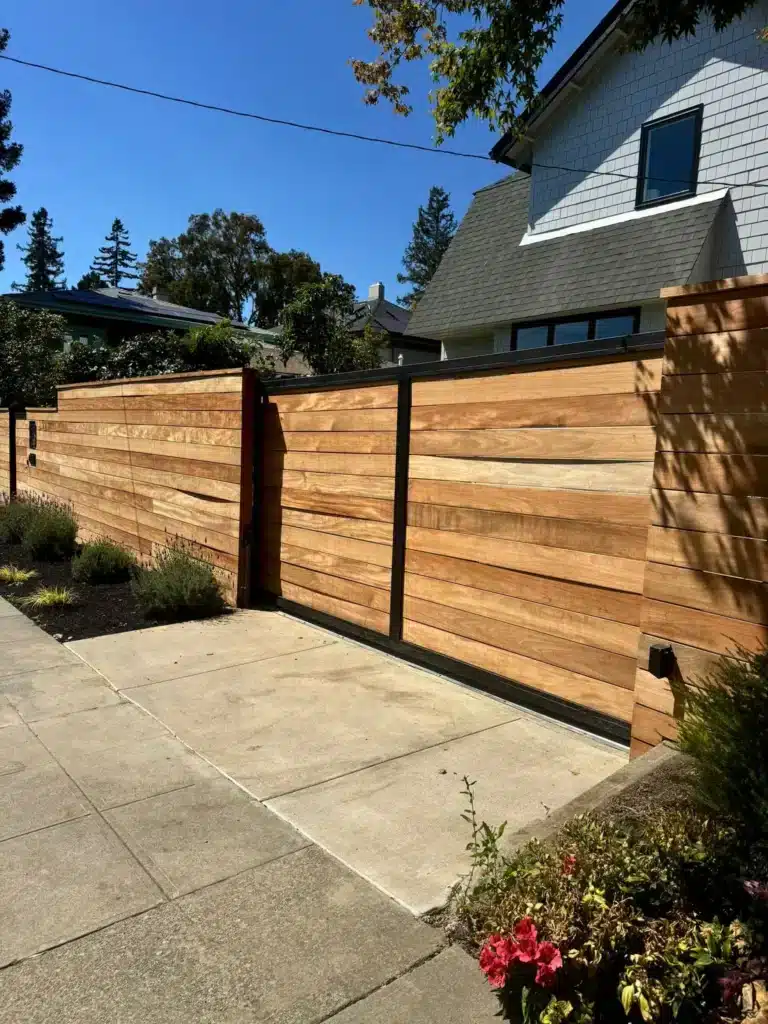
Sliding gates roll horizontally along a track parallel to the fence line. Because there is no arc clearance requirement, they solve the access problem on properties where a swing gate is not physically possible: steep driveways, tight urban lots, and sites with walls or structures positioned close to the opening.
The mechanism uses a ground track with wheels on the gate panel rolling along it. One space requirement applies on the opposite side: the fence line must offer a clear run equal to the full width of the gate panel, so it has somewhere to retract when open. A 14-foot gate needs 14 feet of clear fence line to slide into.
Sliding gates handle high-cycle use well, which makes them a strong choice for commercial properties, apartment complexes, and any residential property where the gate opens and closes many times per day. They are compatible with a range of automated operators and represent the most common configuration.
-
Ornamental Gates
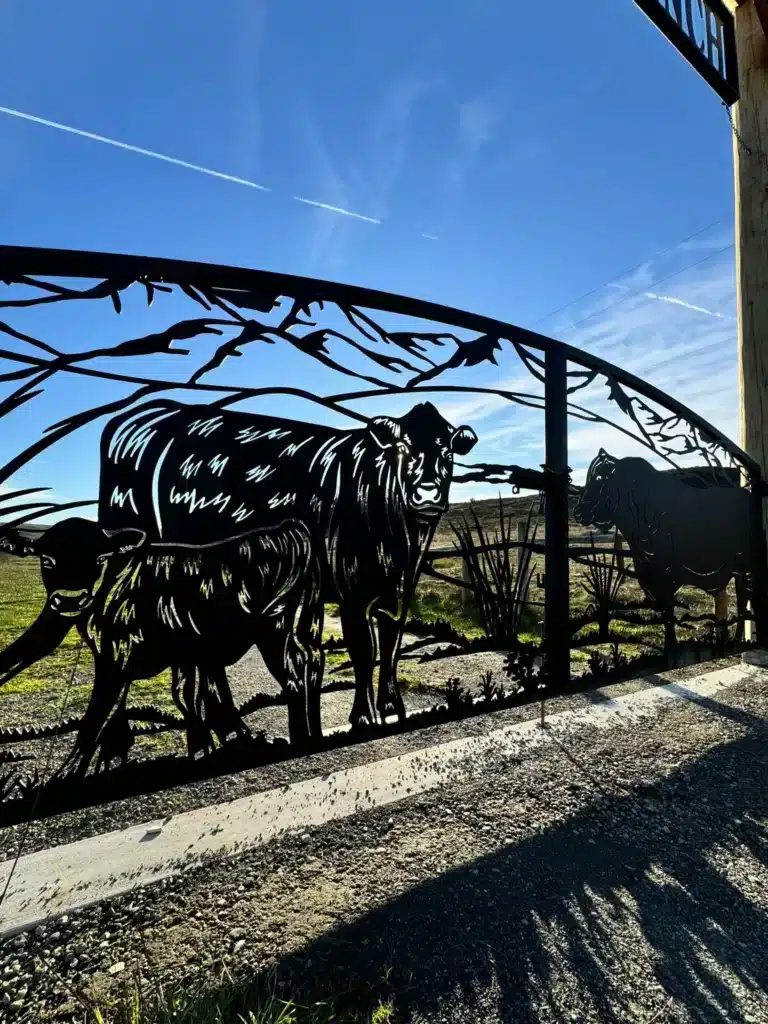
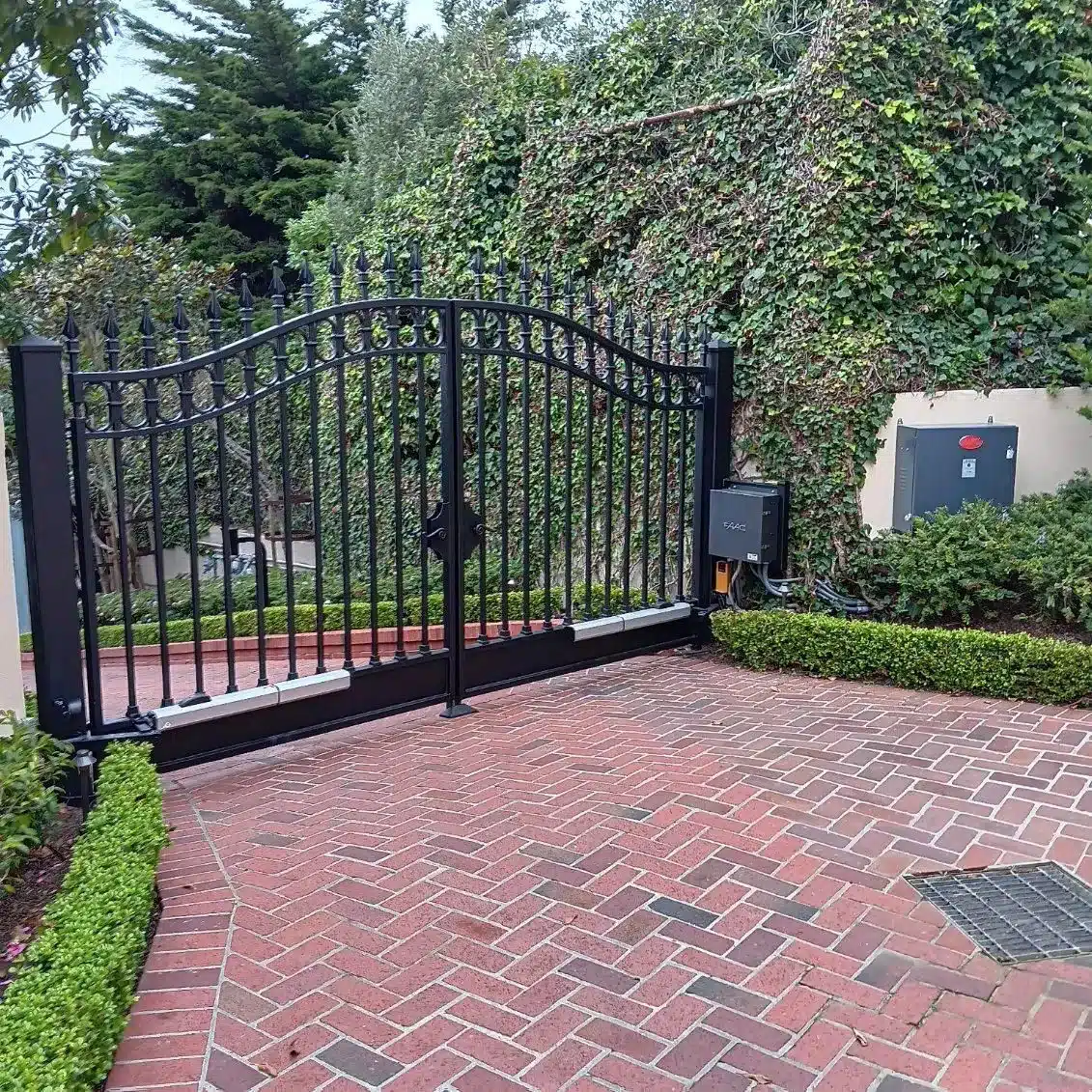
Ornamental gates prioritize visual design without sacrificing function. They are typically fabricated from steel, wrought iron, or aluminum and feature decorative elements such as finials, scrollwork, pickets, and panel patterns that give the gate a finished, architectural appearance.
The defining characteristic of ornamental gates is that aesthetics and security work together rather than trading off against each other. A well-designed ornamental gate communicates property value and deters casual intrusion through its visible quality, while still functioning as a controlled access point.
Ornamental gates are available in swing and sliding configurations and automate well with the same operators used on standard residential gates. Aluminum ornamental gates offer a lighter-weight option with natural corrosion resistance. Steel and wrought iron deliver greater impact resistance and a heavier visual presence suited to estate and high-end residential applications.
Smart Gate Systems: The Category Worth Factoring Into Any New Installation
Smart gates layer IoT connectivity onto a standard automated gate system. The practical additions beyond basic remote operation include smartphone app control from anywhere, video intercom integration for visual verification before granting access, detailed entry and exit logs, temporary access codes for guests or contractors, and alerts when the system detects unusual activity or performance decline.
The gap between a basic automated gate and a smart gate system is significant in daily operation. A basic automated gate opens and closes on command. A smart gate tells you who opened it, when it opened, and flags declining motor performance before it becomes an emergency failure. That last capability alone prevents the most common emergency service call: a gate opener that stops working without warning on a Sunday morning.
As access control technology becomes more affordable, factoring smart gate capability into any new installation or major upgrade is worth the incremental investment.
Types of Gates Compared: Cost, Installation, and Maintenance
Understanding the cost of a motorized gate and upkeep differences between types of gates before installation prevents surprises later. The table below reflects typical residential-scale projects; commercial applications carry higher hardware and labor costs across all categories.
Single Swing Gates
Lower material and installation costs than any multi-panel or track-based design. Automation hardware is inexpensive and widely available. Maintenance is minimal: periodic hinge lubrication and opener inspection.
Dual Swing Gates
Moderate cost increase over single swing due to additional panel, hardware, and synchronized automation. Maintenance mirrors a single swing but applies to twice the hinge and hardware count.
Sliding Gates
Higher installation cost driven by track preparation and ground work. Long-term maintenance includes track cleaning to prevent debris buildup, which affects roller performance over time. Automation hardware is more robust and carries a higher upfront price than swing gate operators.
Ornamental Gates
Material cost varies significantly by fabrication complexity. Simple picket designs cost less; custom scrollwork and multi-panel patterns carry premium pricing. Powder-coat or paint finish on steel requires periodic touch-up to prevent rust from scratches.
Wooden Gates
Material cost is moderate, but the ongoing maintenance expense is higher than that of metal alternatives due to the sealing and refinishing schedule. Lifespan with proper maintenance is comparable to metal, but neglect accelerates deterioration faster than with powder-coated steel or aluminum.
Installation Complexity by Gate Type
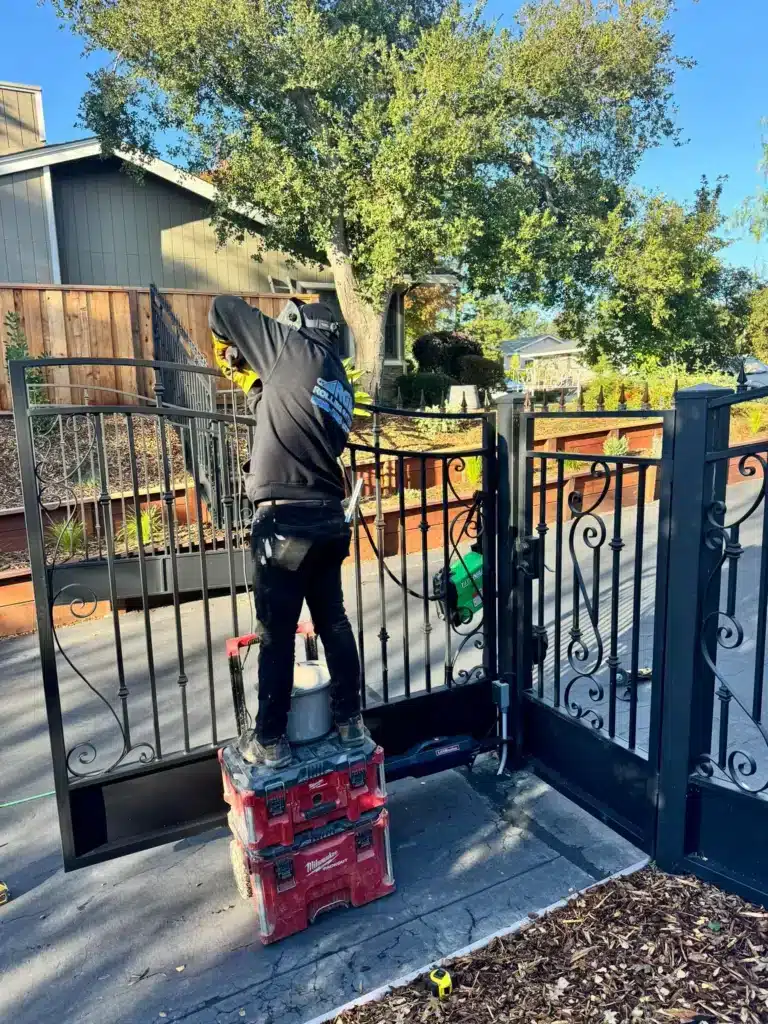
Installation complexity affects both cost and the importance of professional involvement, and the difference between gate types is significant enough to change your budget and timeline. Some configurations are forgiving of minor site variations, while others demand precise ground preparation and professional alignment to function correctly from day one. Each gate type carries a different complexity profile:
- Single Swing Gates: The most straightforward installation of any gate type, with minimal site preparation and standard post setting, hinge mounting, and opener installation.
- Dual Swing Gates: Adds coordination complexity, as both panels must align precisely at the center meet point, and automation hardware must be synchronized so both panels move at the same rate.
- Sliding Gates: Requires the most site preparation of any residential gate type, as the ground track must be level, properly embedded, and clear of obstacles across the full retraction run.
- Ornamental Gates: Heavier fabrications with significant scrollwork can weigh several hundred pounds, meaning post foundations must be specified to handle that load before installation begins.
- Wooden Gates: Structurally straightforward, but accurate post alignment is critical to prevent the panel from sagging or binding at the latch side as the wood seasons over time.
A misaligned center latch on a dual swing gate and an unlevel track on a sliding gate are the two most common DIY installation failure points, and both result in gates that work poorly within months. Professional installation eliminates these risks and ensures the opener, hardware, and gate panel are all calibrated to work together correctly from the start.
Automatic vs. Manual Operation for Any Gate Type
Any of the gate types covered in this guide can be configured as manual or automatic, and the right choice depends on how frequently the gate will cycle and what convenience is worth to the property owner.
Manual gates cost less upfront and have no power dependency. They are a practical choice for low-traffic locations, secondary access points, or properties where automation is not a current budget priority. The honest limitation is that manual gates in daily use become inconvenient quickly, and properties with high cycle requirements wear out manual hardware faster than automated systems designed for that load.
Automated gates add remote control, keypad, and smartphone operation options, as well as compatibility with intercom systems and video access control. For any residential or commercial property with regular daily use, automation is the correct long-term investment.
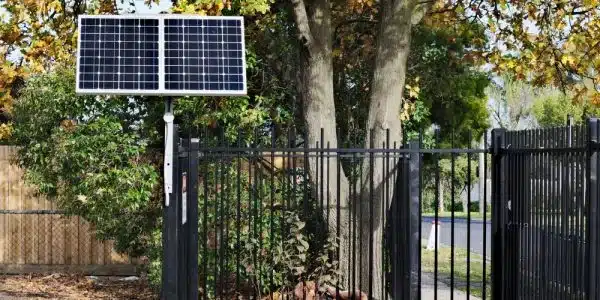
Solar-powered gate systems extend automation to properties without convenient grid access, making them a practical option for rural driveways and remote commercial sites.
Which Types of Gates Hold Up Best in Bay Area Conditions
The Bay Area’s climate creates specific durability considerations that affect material and configuration selection. Coastal zones are exposed to salt-laden air that accelerates corrosion on unprotected steel, while inland areas cycle between dry summers and wet winters that cause wood to expand, contract, and eventually warp without proper sealing. Matching your gate material to your specific microclimate is as important as matching it to your budget:
- Aluminum: The low-maintenance default for coastal and marine-exposed properties, as its natural oxide layer resists corrosion without any additional treatment.
- Powder-Coated Steel: Performs reliably in inland and protected locations, but any chip or scratch that exposes bare steel in a salt-air environment will rust without prompt touch-up.
- Wood (Cedar or Redwood): The practical wood choices for this region are due to their superior natural rot resistance, though both require consistent sealing and refinishing to perform well long-term.
- Wrought Iron: Durable and visually strong, but demands the most consistent maintenance in coastal zones, with rust inhibitor treatments and periodic repainting being non-negotiable in high-humidity locations.
- Vinyl and Composite: Low maintenance across all climates but not security-grade, making them better suited to decorative garden enclosures than primary driveway gates.
Material choice should also match architecture, and a closer look at residential gate materials shows how wrought iron, aluminum, steel, and wood each carry different tradeoffs for durability, maintenance, and cost. According to the U.S. Department of Energy, moisture intrusion and climate exposure are leading causes of premature material failure across all exterior building products, a finding that applies directly to gate material selection in variable coastal climates.
Get the Right Gate Installed by Rolling Gates
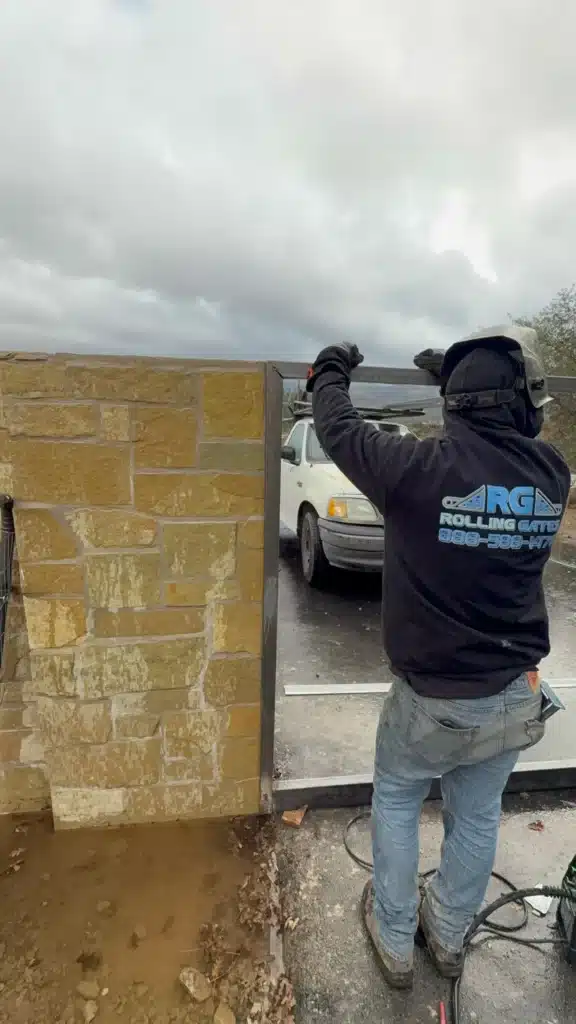
As a trusted fence contractor in the Bay Area, Rolling Gates brings 7+ years of specialized experience to every project, from a straightforward single swing gate installation to a custom ornamental sliding gate on a commercial property. As a licensed team with a 5.0 Google rating, the work gets done correctly for all automatic driveway gate installations.
Every estimate is free and transparent, with no hidden fees and no high-pressure sales. Service vehicles are fully stocked for on-the-spot repairs and installations across all gate types, and same-day service is available for urgent situations. Rolling Gates installs and services wooden gates, single and dual swing gates, sliding gates, and ornamental gates throughout the Bay Area.
Your Next Gate Starts With the Right Choice
The types of gates available for residential and commercial driveways each solve a specific set of conditions, and the right choice comes from matching the gate to your property’s space, security requirements, climate exposure, and budget rather than picking based on appearance alone. Contact us for a free quote and get the right gate specified, installed, and working correctly from day one.