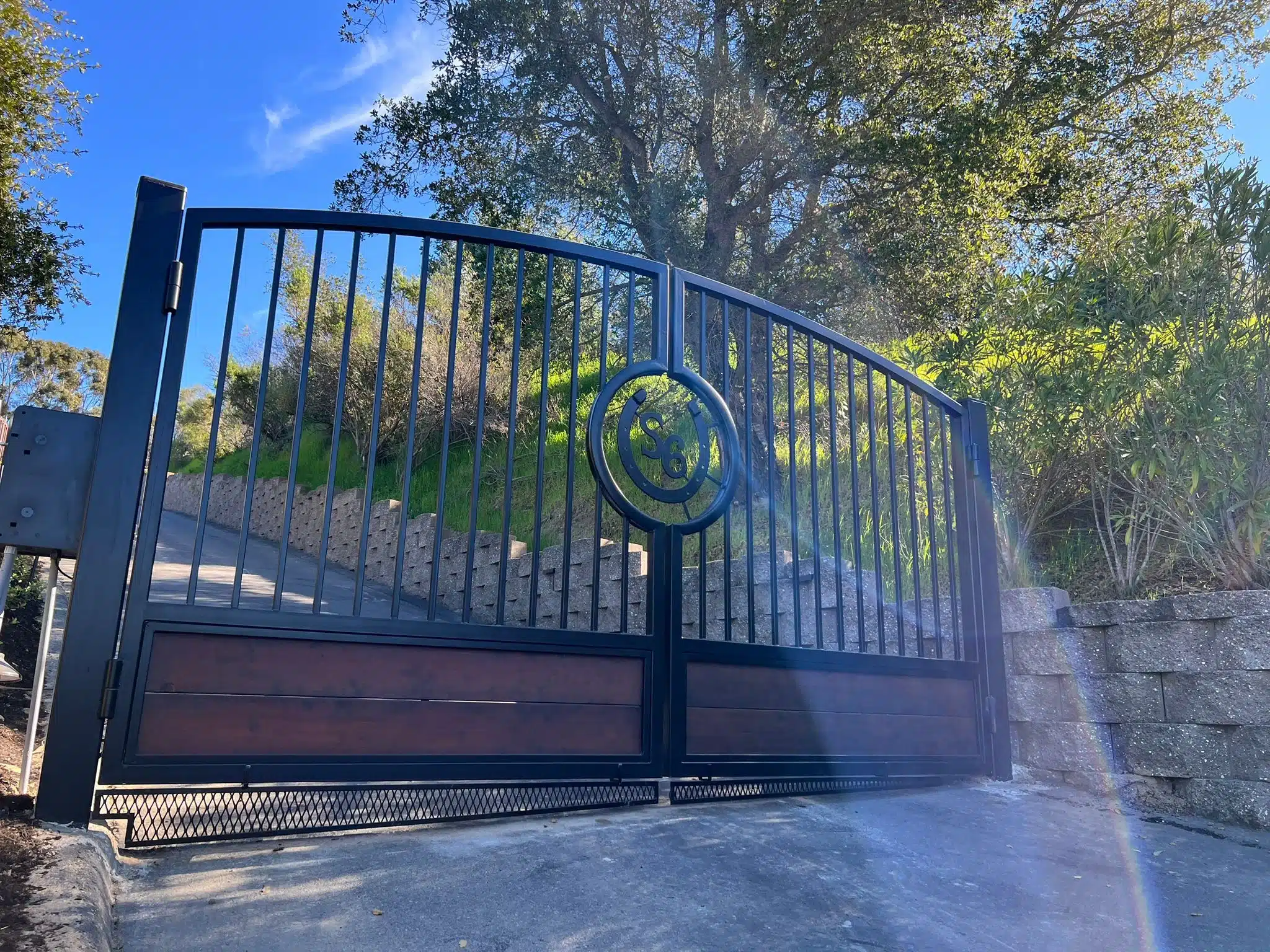

A gate that stops mid-cycle rarely fails without warning. Automatic gate maintenance is what catches those problems while they’re still low-cost to fix. This guide walks through the maintenance timeline, what a gate repair technician actually checks during a tune-up, the seasonal gate maintenance checklist for properties, and the warning signs that mean it’s time to call someone.
What Automatic Gate Maintenance Actually Involves
A professional service visit is a full mechanical and electrical review. Our 25-point diagnostic check is designed to do more than fix what’s already wrong; it helps identify early signs of wear before they turn into costly repairs.
Each visit is a thorough inspection of your gate’s mechanical and electrical components, ensuring everything operates safely, reliably, and as intended. The goal is to catch small issues while they’re still a $150 to $250 tune-up instead of an after-hours emergency call.
What Happens When You Skip Routine Gate Maintenance?
Gate neglect looks like a specific set of scenarios. An unexpected lockout after hours. A gate that reverses for no obvious reason. A motor that strains and grinds louder every month until it stops entirely. None of these happens overnight. They build slowly, and by the time the gate fails completely, the fix usually costs several times more than the maintenance visit would have.
Skipping service doesn’t save money; it shifts the cost from a scheduled visit to an emergency one. Emergency gate service typically starts well above the price of a standard tune-up before any parts are even touched, and that gap only grows if the call comes in after hours or on a weekend. Most of the failures trace back to the same handful of issues, which are dry hinges, misaligned sensors, and a control board nobody’s checked in years. All three get caught during a standard visit, which is exactly why routine service tends to pay for itself rather than add to the bill.
Gate Maintenance Timeline: What to Expect Each Year
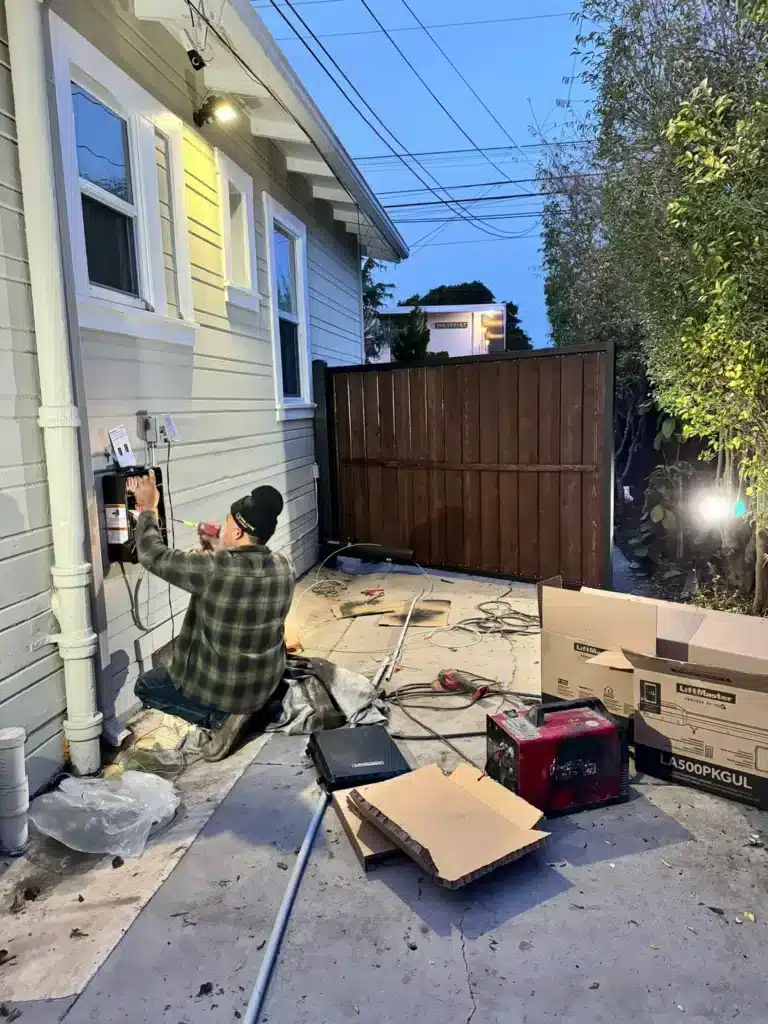
A gate doesn’t need attention on a single schedule. Owner-level checks, mid-year inspections, and a full professional tune-up each catch different problems, and skipping the smaller ones is usually what turns into an after-hours call later.
Every 3 Months
Spend a few minutes walking the gate and looking for what’s easy to catch early, such as debris caught in the track or around the hinges, dirt buildup on photo eye sensors, and anything rattling or loose that wasn’t before.
Listen for a new sound during a normal open-close cycle, since a fresh grind or squeak almost always shows up before a part actually fails. If the gate runs on solar, check the panel for dirt or leaf buildup that could be cutting into charging.
Every 6 Months
During the biannual check, this visit is where a technician tests the safety reversal function required under the UL 325 safety standard, verifies that limit switch calibration hasn’t drifted, and load-tests the battery backup. These are the components that tend to shift out of spec quietly, without an obvious symptom, which is exactly why the quarterly self-check alone won’t catch them.
Every 12 Months
The full tune-up for most residential gates, which includes complete lubrication of hinges, rollers, chains, and pivot points, a control board inspection for corrosion or fault codes, remote and keypad testing, and the same safety reversal and sensor checks covered in the six-month visit.
This is also the point to flag anything that’s been getting worse gradually, a slower cycle time, a hinge that’s started to squeak between visits, since those small changes are the clearest early warning a bigger repair is coming.
What Is Included in a Seasonal Gate Maintenance Checklist?
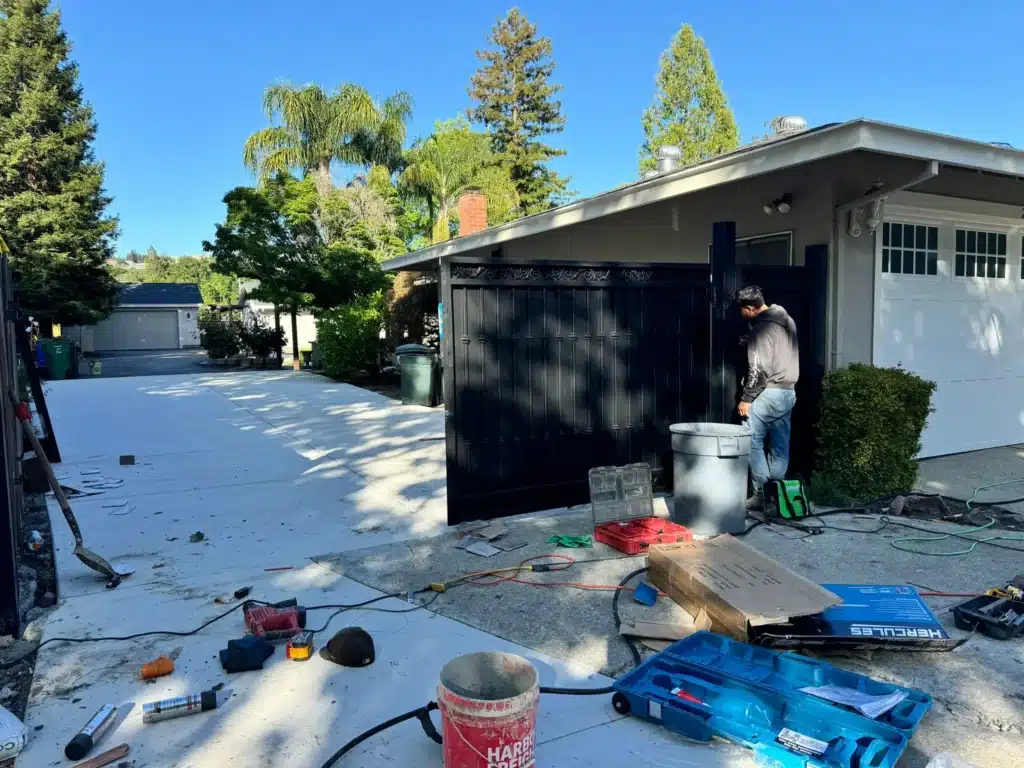
A gate doesn’t face the same stress year-round. Bay Area’s weather affects gate performance as it creates different pressure points in every season, and a checklist built for one season doesn’t cover the next one.
Spring
After the rainy season ends, it’s worth checking for the damage moisture and runoff leave behind:
- Inspect hinges and hardware for rust after the rainy season.
- Test battery backup following any winter outages.
- Clear debris from tracks and photo eye paths.
Summer
Heat brings its own set of issues as components expand and settings shift under it:
- Check rubber seals on underground motor housings.
- Inspect limit switch settings if the gate runs sluggishly in afternoon heat.
Fall
Before the rain returns, this is the window to get ahead of what winter will test:
- Reapply manufacturer-approved lubrication before the rain returns
- Check drainage around gate posts to prevent pooling
- Test the safety reversal function before leaves start collecting in the gate path.
Winter
With storms and cold weather in play, these checks protect the components most exposed to it:
- Inspect photo eyes for water intrusion.
- Check control panel enclosure seals.
- Confirm battery backup charge before storm season sets in.
What are the Common Problems of Automatic Gates?
Most gate issues trace back to a specific mechanical or electrical cause. Here’s what’s actually driving each one.
Slower Than Normal Movement
Batteries lose their ability to hold a full charge over time, and a backup running below capacity can’t deliver the power a motor needs for a normal-speed cycle. Motors also lose torque as internal components wear, and dry or degraded lubrication forces the whole system to work harder just to move the gate at its usual pace.
Grinding or Scraping Noise
Rollers wear down unevenly with repeated use, and once the wheel surface degrades, metal starts contacting metal instead of rolling smoothly. Debris that collects in the track has the same effect, and a track that’s shifted out of alignment forces the gate to drag against a surface it isn’t designed to touch.
Gate Reverses Mid-Travel
This happens when a photo eye sensor gets triggered by something in its path, even something as minor as a shadow or dust, or when a limit switch has drifted out of its calibrated stopping point. The gate’s safety system is designed to interpret that as an obstruction and reverse rather than risk a collision.
Remote or Keypad Works Intermittently
A weakening battery inside the remote delivers a signal that’s too faint to register consistently. Interference from nearby wireless devices can also disrupt the transmission, and a receiver antenna that’s loose, damaged, or poorly positioned won’t pick up a clean signal even when the remote itself is working fine.
Gate Won’t Fully Close or Latch
Limit switches control the exact point where the gate stops, and once one drifts out of calibration, the gate stops short of where it needs to be. Gate sag has the same end result through a different cause: as hinges and hardware loosen over years of cycles, the gate’s frame shifts just enough that it no longer lines up with the latch.
Visible Rust, Cracks, or Leaning
Rust forms wherever the protective coating on metal hardware has worn through or been scratched, exposing raw metal to moisture. Cracks develop from repeated stress on the same points, usually welds or joints, cycle after cycle. A leaning gate is typically the result of a shifting post or an incorrect gate placement, which throws off the whole structure’s alignment even if the gate panel itself is fine.
What Are the Common Automatic Gate Fixes for Your Problems?
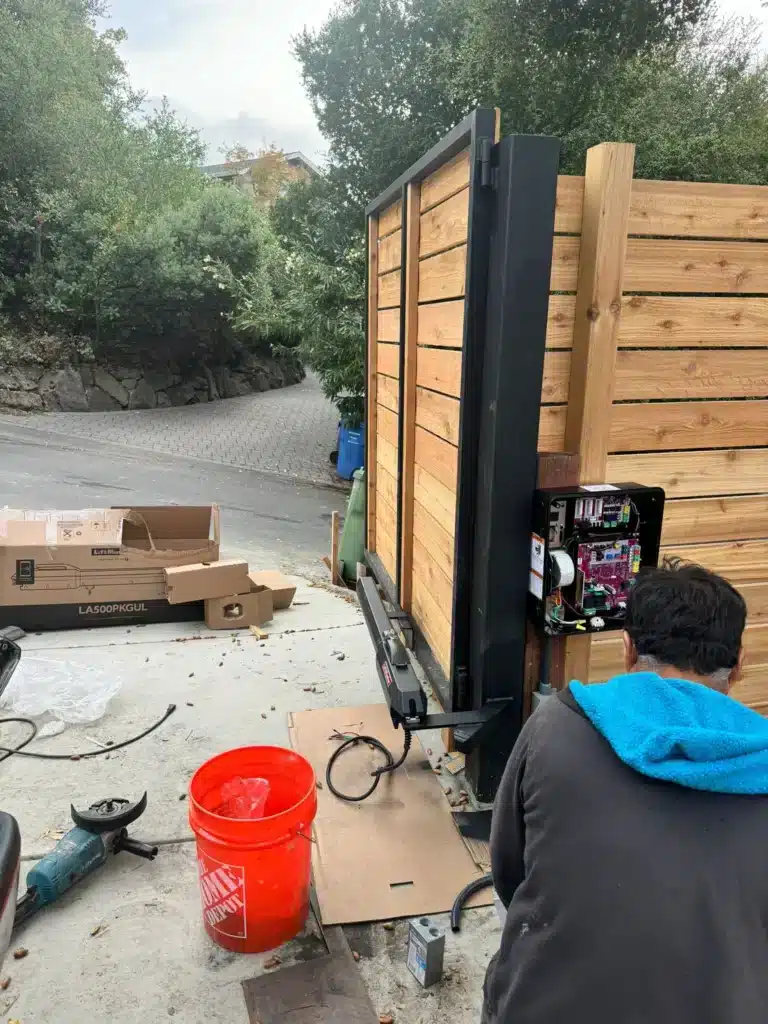
Each of these problems has a specific fix, and matching the right one to the actual cause is what separates a lasting repair from a temporary patch.
Battery and Motor Inspection
A technician load-tests the battery backup and checks motor performance under normal operation. If the motor is straining rather than simply underpowered, this is also when a repair-versus-replace assessment happens.
Roller and Track Cleaning
Clearing debris from the track and inspecting rollers for wear resolve most grinding and scraping issues. Worn rollers get replaced, and the track gets realigned if it’s drifted out of position.
Sensor and Limit Switch Recalibration
Photo eye sensors get cleaned and realigned, and limit switches are reset to the correct travel points. This is the standard fix for a gate that reverses before completing its cycle.
Receiver and Battery Replacement
A technician tests the receiver and antenna connection, checks for interference, and replaces a failing battery in the remote or keypad. Persistent issues after this usually point to a hardware problem rather than a simple fix.
Limit Switch Adjustment and Sag Correction
Recalibrating the limit switch resolves most latching issues caused by drift. If the gate itself has sagged, that requires a structural adjustment to the hinges or frame before the latch will engage properly again.
Rust Treatment and Structural Repair
Surface rust gets treated before it spreads, and cracked or bent components get repaired or replaced. A leaning gate typically needs the post or foundation addressed, not just the panel.
When Should You Call a Professional Contractor for Your Gate Problems?
Call a professional whenever a gate issue involves the electrical system, safety sensors, or the gate’s structure. Minor symptoms, like a sagging gate, a gate running slightly slower than usual, or a remote that occasionally needs a second try, can be monitored and mentioned at the next scheduled visit. But a gate that reverses unpredictably, won’t complete a cycle, or won’t fully close and latch needs attention right away, since an unlatched gate is a security gap, not just an inconvenience.
The same applies to any visible structural damage, such as a crack, a significant lean, or a shifted post, and to any failure of the safety reversal system, which is what prevents the gate from closing on a person, vehicle, or pet. These aren’t situations to troubleshoot independently. Guessing at the wrong fix can worsen the underlying problem or, in the case of safety components, create a genuine hazard.
How Documented Service Protects Your Gate Warranty
Skipping professional maintenance can void a gate motor’s warranty, and most property owners don’t find out until they file a claim and get denied. Most major gate motor manufacturers require proof of regular maintenance to honor a warranty claim, and if a motor fails partway through an eight-year warranty with no service record to show for it, the manufacturer has grounds to deny it outright.
Valid documentation means a written service report showing the date of service, what was inspected, what was adjusted, and any parts replaced or flagged for future attention. For commercial properties and HOAs, that record isn’t optional paperwork; it’s liability protection. If a gate injures someone and there’s no history of documented safety testing, the exposure is significant. Every visit should end with a written report, and if your current provider doesn’t issue one, that’s worth addressing before it becomes a problem.
Keep Your Gate Running Smoothly with Rolling Gates
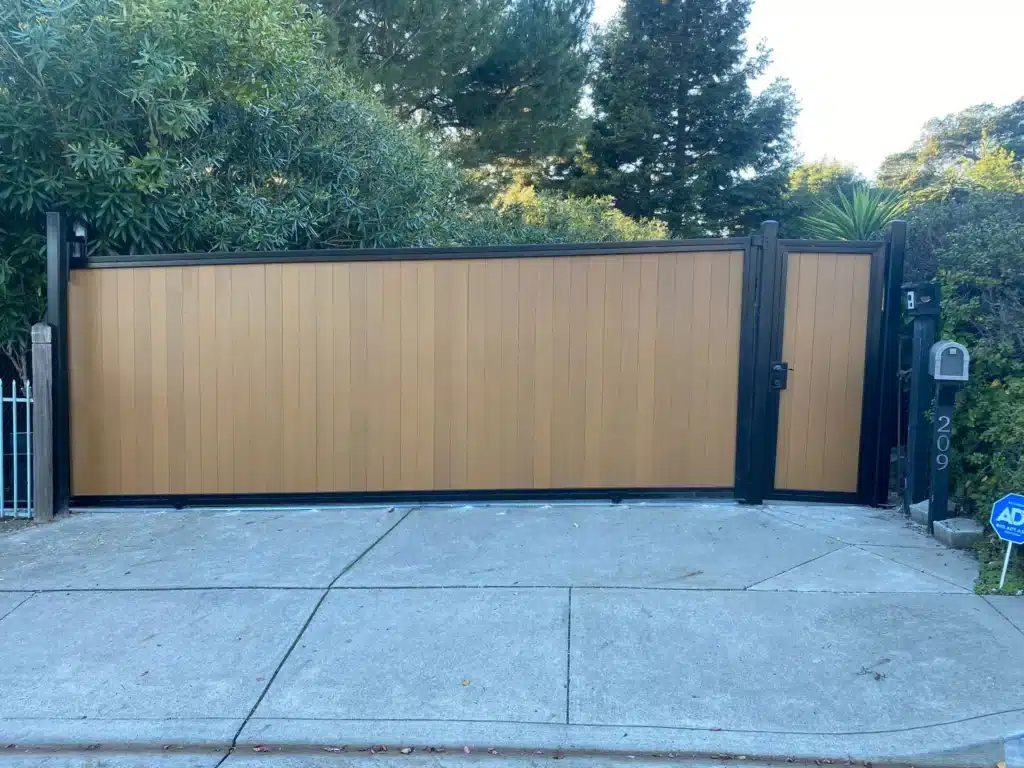
As a trusted fence contractor serving the Bay Area, we handle gate installation and repair with same-day service availability and transparent pricing on every project. Our 25-point diagnostic check ensures we address current problems and prevent future ones.
With more than 7 years of experience, our team is capable of handling any type of gate problem. Whether it’s a routine annual tune-up or a same-day call after a gate stops mid-cycle, our process stays consistent: on-site diagnosis, free estimate, repair on the spot, and a written record of what was done.
Why Routine Gate Maintenance Pays Off in the Long Run
A well-maintained gate protects your property, keeps moving without disruption, and avoids the kind of emergency repair bill that always costs more than the tune-up would have. Routine maintenance is what keeps small issues small.
Skip it, and those same small issues tend to resurface later as the emergency call and repair bill that this guide walked through. Contact us to schedule routine gate maintenance before small issues turn into after-hours emergencies.
Frequently Asked Questions About Gate Maintenance
How to maintain an automatic gate?
Lubricate moving parts regularly, keep sensors and tracks clear of debris, and test the safety reversal function. Schedule a professional tune-up once a year to catch anything a quick check might miss.
What is the best lubricant for an automatic gate?
White lithium grease. Skip WD-40, it attracts dirt and draws in moisture, which speeds up rust instead of preventing it.
How do I know if my gate motor needs replacing instead of repairing?
If the motor is 10 or more years old, has needed two or more repairs in the past two years, or the repair cost approaches half the price of replacement, replacement is usually the smarter long-term call. Contact us, and we will give you a clear repair-versus-replace recommendation based on the motor’s actual condition.
Do you work on older or custom-built gates?
Yes. Older motors and custom-built gates installed by other contractors are fully serviceable regardless of brand or age. Gates over 12 years old are assessed individually for repair-versus-replacement value based on condition, not assumptions.