How much does a motorized gate cost? For most homeowners, the answer falls somewhere between $3,500 and $10,000+ fully installed, but where your project lands depends on your gate type, material, and what your residential gate installation actually requires. With the gate automation market projected to reach $34 billion by 2032, more manufacturers and installers are entering the space, making it more important than ever to understand what drives cost before you commit. This guide breaks down every variable so you can budget accurately before the first contractor shows up.
Key Cost Takeaways of a Motorized Gate
- Automating an existing manual gate costs significantly less: If you already have a gate structure in place, converting from manual to automatic averages $3,500 to $10,000 fully installed, making automation far more accessible than a full replacement.
- The price for a new gate with a motor could range from the low $10,000 to $20,000: Most residential projects fall in this range, fully installed, due to labor rates and depending on add-ons such as an intercom, cameras, and more.
- Gate type is the biggest cost variable: A basic single swing gate starts around $3,500, while a standard sliding gate begins at $4,500 and climbs from there depending on size and material.
- The opener is a major standalone cost: Most companies sell the gate and opener separately. The motor alone adds $300 to $4,750 to your project, and it must be matched to your gate’s weight and cycle requirements.
- Bay Area installs run above the national average: Higher local labor rates, strict municipal permitting, and site conditions like hillside terrain routinely push Bay Area projects $1,000 to $2,500 above national benchmarks.
What Is the Cost of Each Motorized Gate Type?
Gate type determines how your gate moves, how much hardware it requires, and how complex the installation is. Two configurations cover the vast majority of residential projects.
Sliding Gate
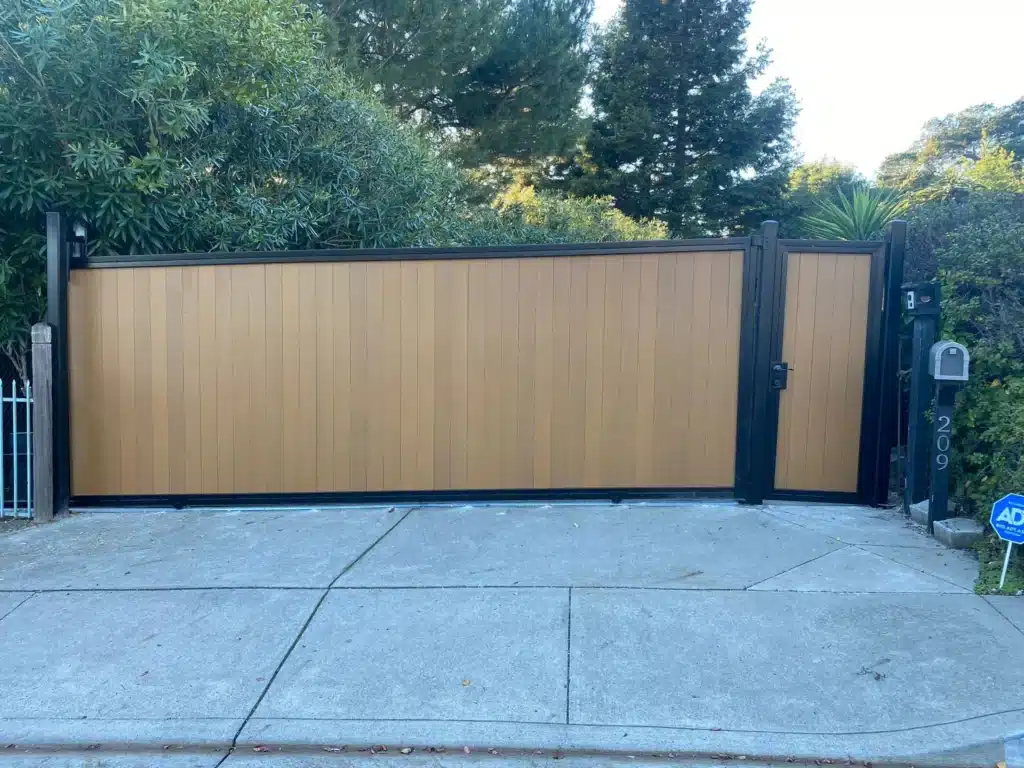
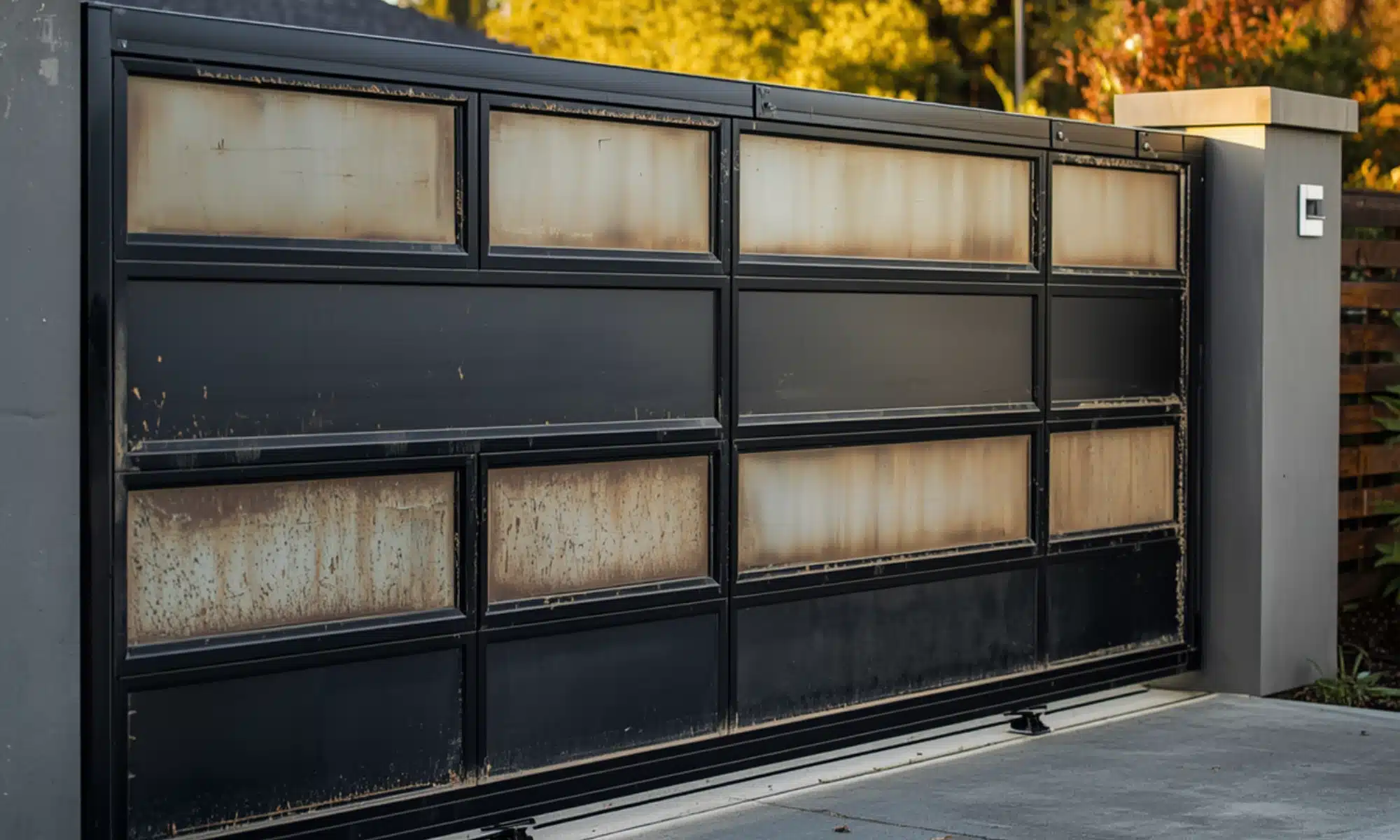
A sliding gate moves horizontally along a track, making it the preferred choice for sloped driveways or properties where a swinging gate would conflict with the driveway grade or adjacent landscaping. The track installation and concrete groundwork required add complexity and cost.
A standard sliding gate runs $4,500 to $7,000 installed, with larger or custom configurations pushing past that range. The motor load required for sliding gates is also higher, which affects opener selection and cost.
Swing Gate
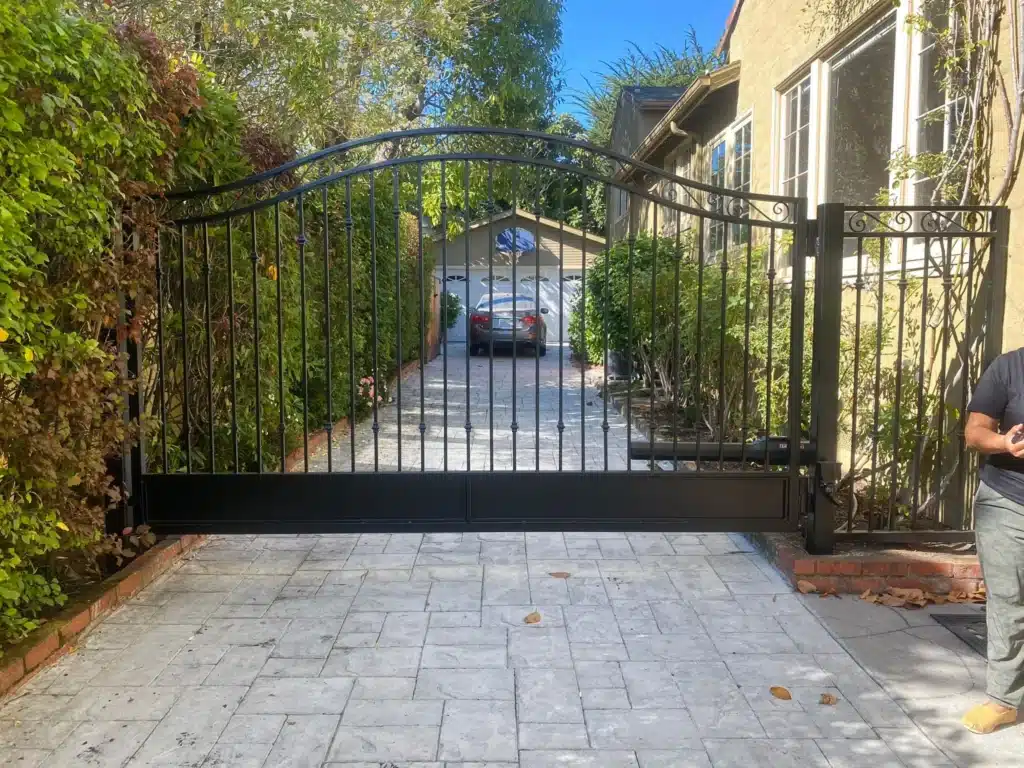
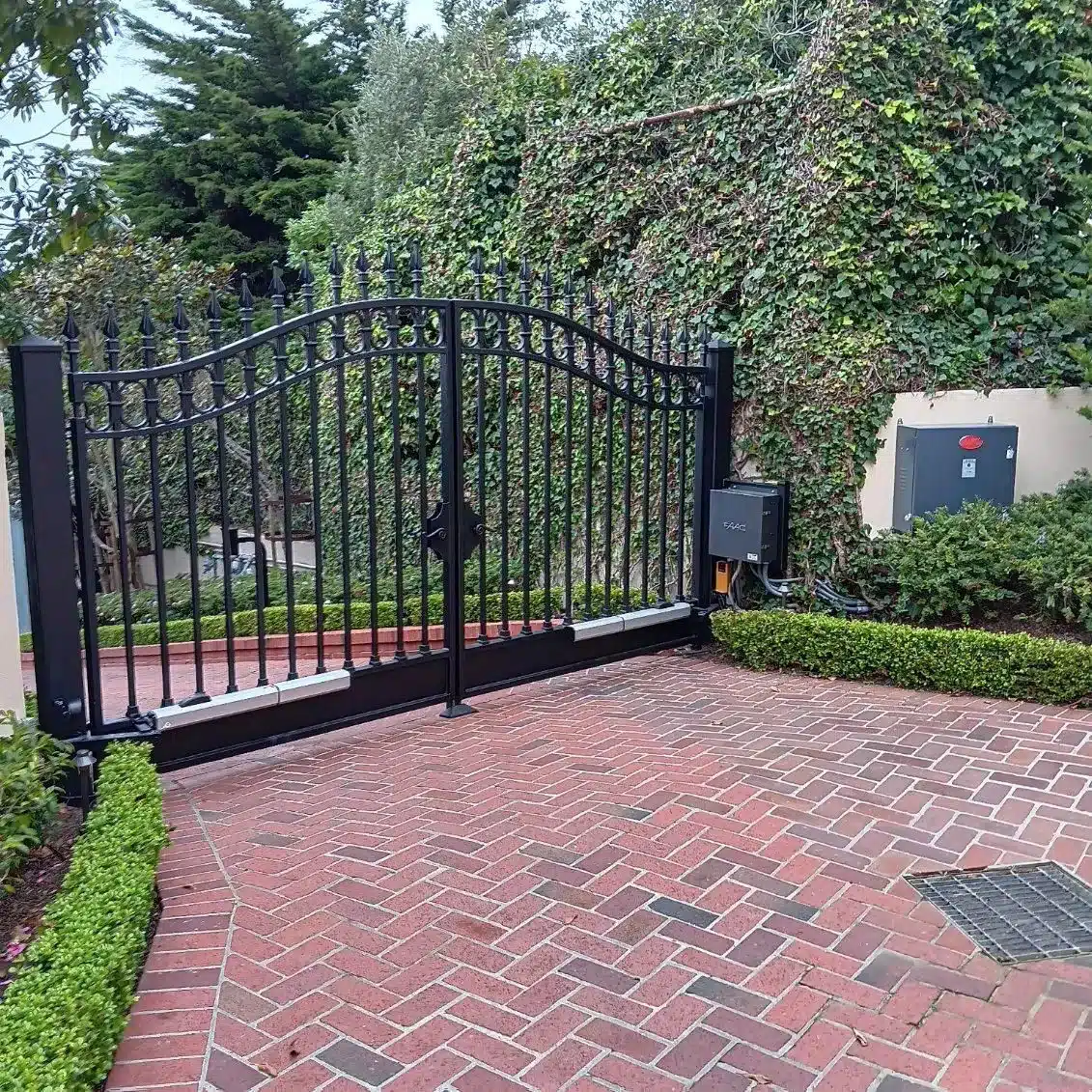
Swing gates are the most common residential configuration, available as single or double leaf depending on driveway width. They require less groundwork than sliding gates but need adequate clearance for the arc of the swing.
A basic single swing gate starts at $3,500 to $5,000 installed. Double swing configurations require two motors and additional hardware, which moves the price closer to the sliding gate range. For most standard residential driveways, a single swing gate delivers the best value.
What Does a Motorized Gate Cost by Material?
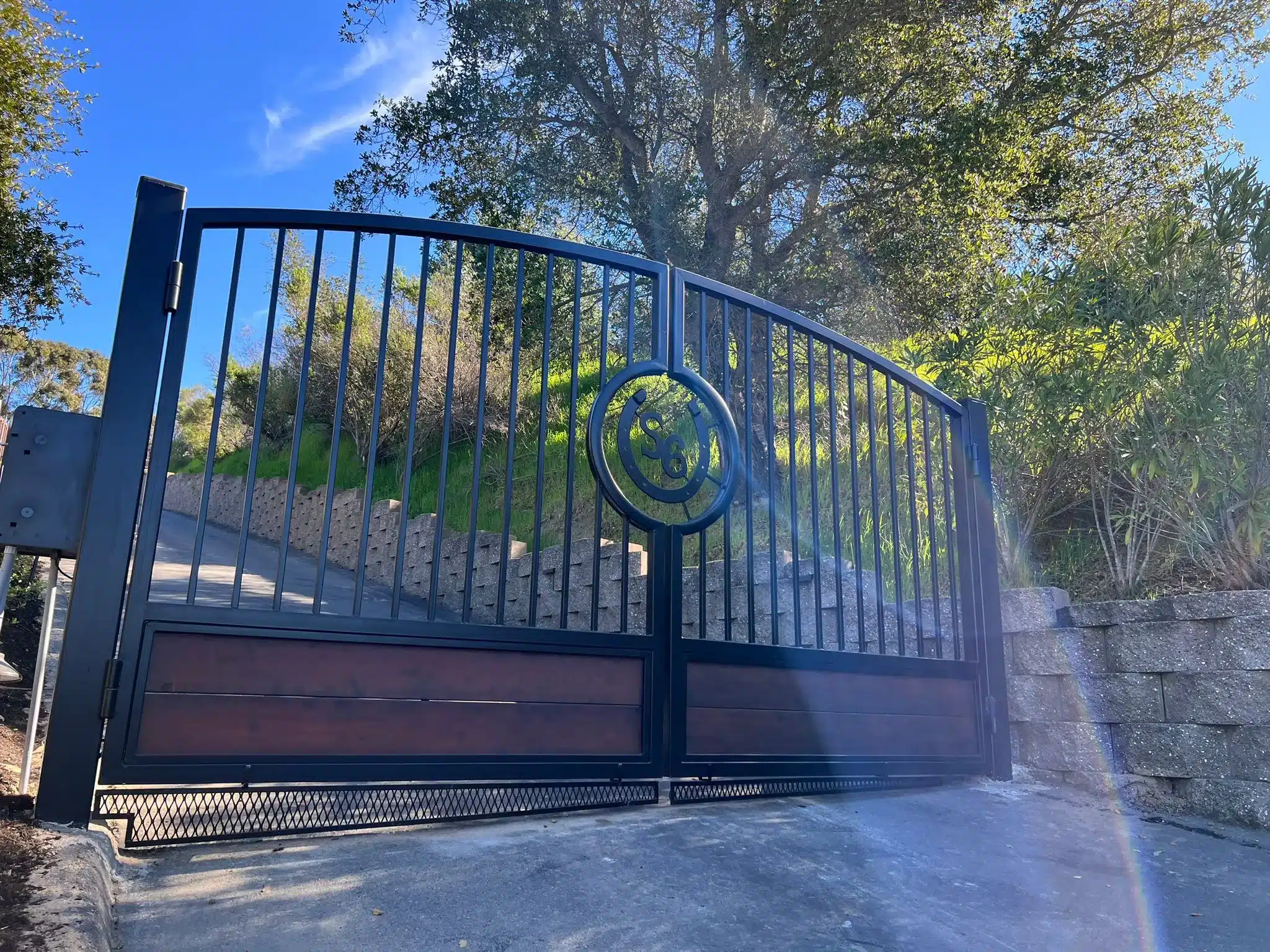
All the gates we make have a metal frame; some are filled with wood, and others are entirely metal. Material affects upfront price, long-term maintenance requirements, and the motor power your opener needs. Heavier materials demand more torque, which can add $300 to $600 to opener costs on top of the gate price itself:
- Chain Link or Vinyl: $750 to $3,000. The most budget-friendly options. Vinyl resists corrosion and requires minimal upkeep, but performs poorly in extreme climates and is not well-suited for heavy-use automated applications.
- Wood: $850 to $8,500. A wide range reflecting significant variation in wood species and design complexity. Wood enhances curb appeal but requires resealing every two to three years and is vulnerable to warping in wet climates.
- Aluminum or Steel: $1,150 to $8,600. Both materials offer durability and strong automation compatibility. Aluminum is lighter and corrosion-resistant, while steel offers more structural rigidity for high-security applications.
- Wrought Iron: $2,200 to $8,600+. The premium option for ornamental appeal and longevity. Wrought iron requires periodic refinishing to prevent rust but is the most durable and visually striking material available for residential gates.
When budgeting by material, always factor in the cost difference in opener requirements. A lightweight aluminum gate can run on a mid-range motor, while a heavy wrought iron or wood gate may require a commercial-grade opener, regardless of how modest the rest of the project is.
What Are the Costs of the Gate Opener and Automation Components?
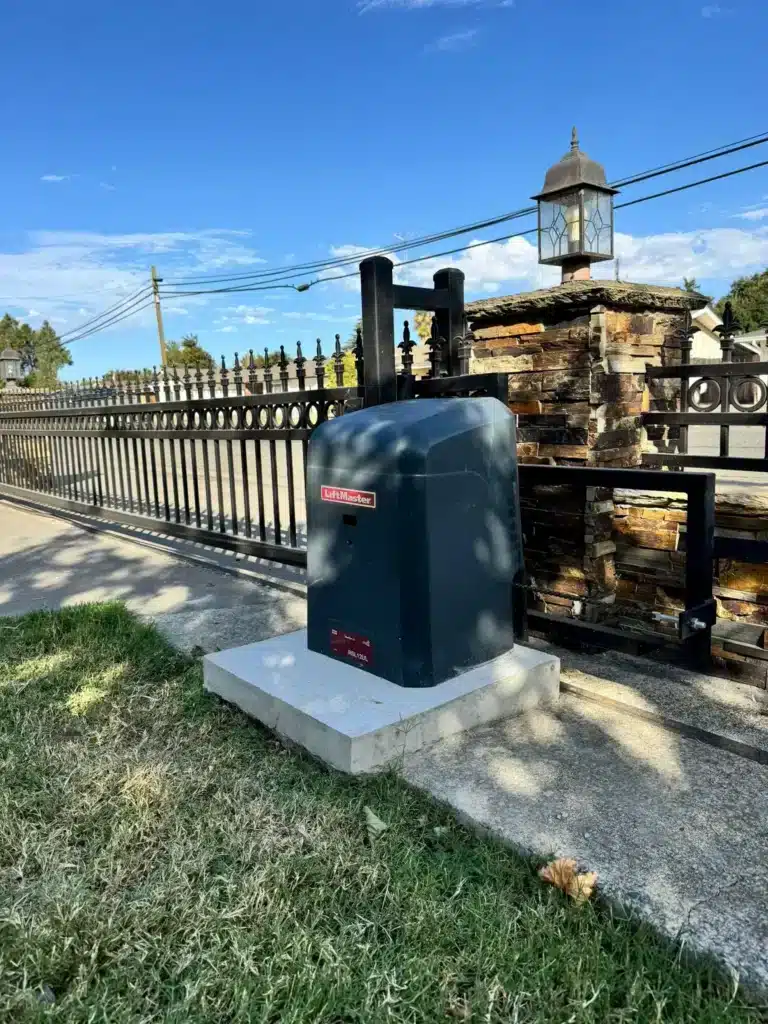
Most gate companies sell the gate and the opener as separate line items, which surprises buyers who assume one price covers everything. The opener and the automation components you add on top of it are often collectively the highest cost in the project after the gate structure itself.
Gate Opener Cost
The opener must be matched to your gate’s weight, width, and daily cycle requirements, and choosing the best gate opener for your configuration before purchasing prevents costly mismatches. Undersizing a motor is one of the most common and costly mistakes in DIY installations:
- Basic residential swing gate opener: $300 to $800, suitable for lighter single-leaf gates with moderate daily use.
- Mid-range residential opener: $800 to $1,500, covers most standard double-leaf and heavier single-leaf configurations.
- Sliding gate opener: $600 to $2,000, higher motor load requirements push sliding gate openers above comparable swing gate units.
Labor to install the opener alone runs $200 to $600, rising when new electrical wiring or trenching is required.
Automation Components Cost
Beyond the opener, the access control and power components you choose add meaningfully to the total:
- Intercom systems: $675 to $4,500 cellular and Ethernet options are available. Video intercoms sit at the higher end and allow you to see and speak with visitors before granting access, making them the most popular upgrade for residential security.
- Solar-powered gate systems: $500 to $1,500 for the panel and battery system on top of the opener cost. Solar eliminates the need for electrical trenching, which can offset the added hardware cost entirely on properties where the gate sits far from a power source.
- Keypads, exit loops, and smart home integration: $500 to $2,500 depending on system configuration. Smart home integration and video intercoms sit at the higher end of this range.
What is the Cost of an Automatic Gate Installation in the Bay Area?
Bay Area homeowners pay above the national average on every line item in an automatic gate project. Higher local operating costs, stricter permitting environments, and challenging site conditions all push the final number above what national cost guides suggest. A realistic Bay Area budget for a standard residential installation runs $5,000 to $10,000+.
- Labor Rates: Labor rates in the Bay Area run up to $60 – $100 per hour compared to the national range of $30 to $80 per hour.
- Site Conditions: Hillside properties common throughout the Contra Costa, Maring, and the East Bay hills require additional groundwork for post foundations and sometimes retaining structures
- Permits: Permits add $150 to $500, and cities like San Francisco, San Jose, and Oakland each have their own timelines and inspection requirements that can extend a project.
What Is the Long-Term Cost of an Automated Gate?
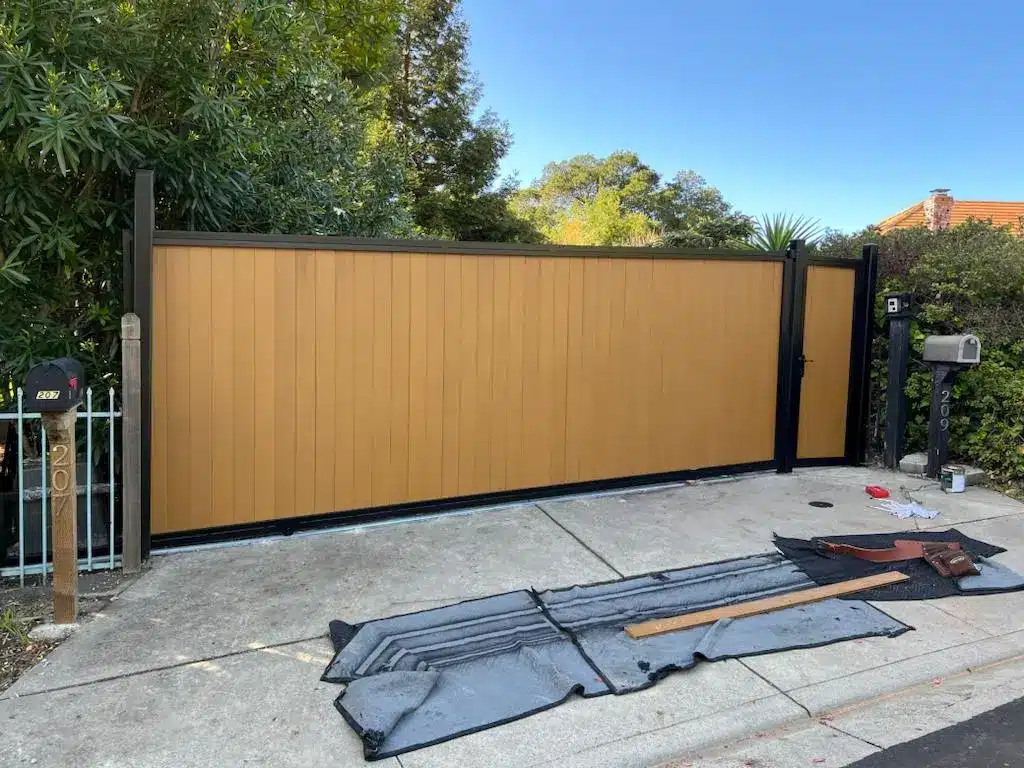
The purchase price is only part of what a gate costs over its service life. A realistic 10-year ownership model for a mid-range residential installation looks like this:
- Initial installation: $3,500 to $7,000 depending on gate type, material, and configuration.
- Annual maintenance: $150 to $400 per year covering lubrication, sensor checks, hardware inspection, and safety testing. Skipping annual maintenance shortens opener lifespan and increases repair frequency.
- Repairs: $200 to $1,500 per incident for common issues like sensor failure, motor replacement, or track realignment. Most quality installations go several years between repairs with proper maintenance.
- Surface refinishing: $200 to $800 every five to seven years for metal gates, every two to three years for wood.
What Is the Cost Difference Between DIY and Professional Automatic Gate Installation?
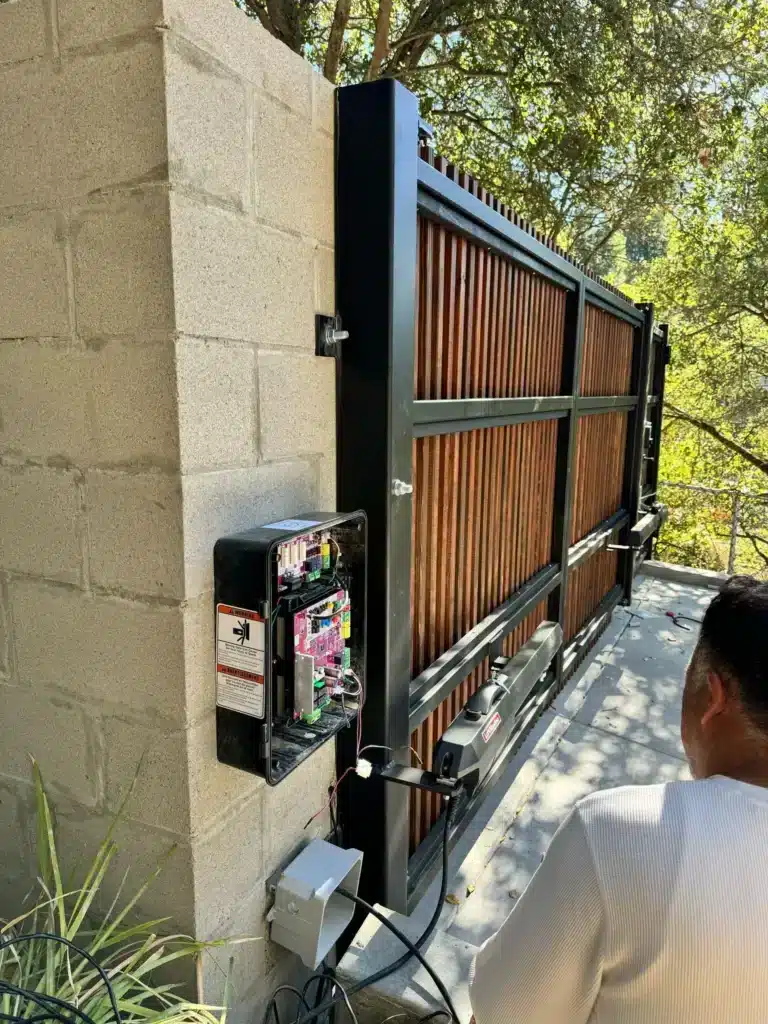
DIY automation kits range from $450 to $4,500, but the hardware cost is only part of the equation. Permits, electrical work, and the realistic probability of at least one correction mid-install narrow the gap between DIY and professional faster than most buyers expect.
Alignment errors on sliding tracks or dual-leaf configurations cost $200 to $500 to fix after the fact, and in many cases, that expense exceeds what professional installation would have cost from the start.
Professional installation covers site evaluation, post setting, gate alignment, opener programming, and permitting as a single package. The cost is higher upfront, but the number is stable, and the work is guaranteed.
Get the Right Gate Installed by Rolling Gates
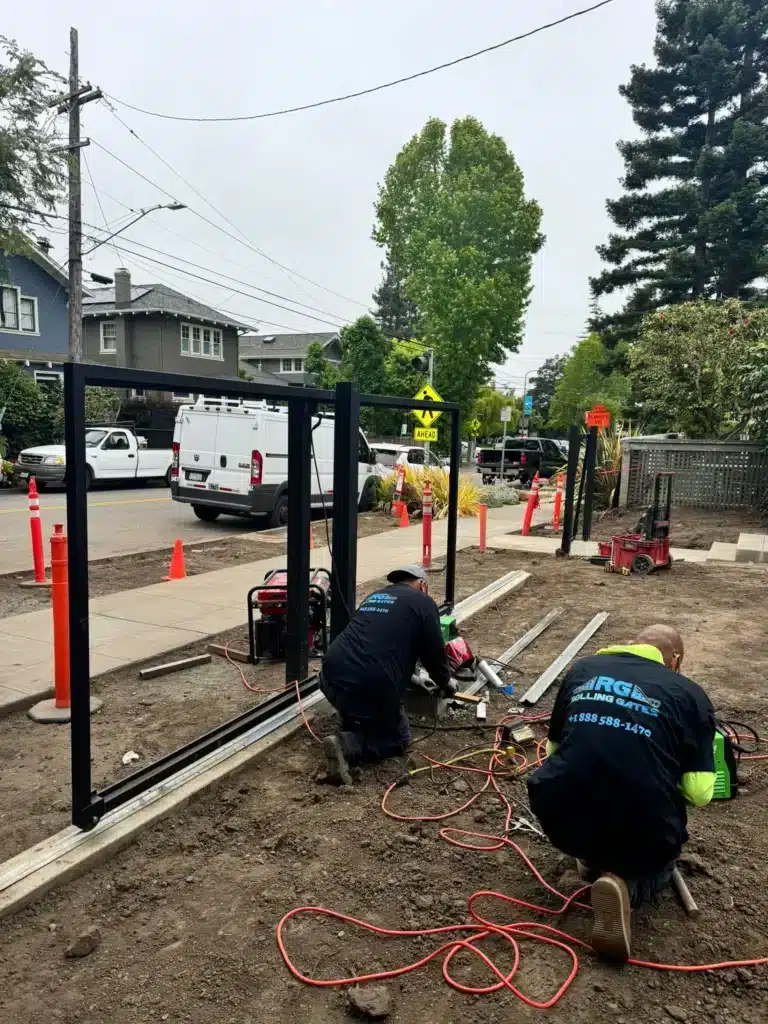
As a trusted fence contractor serving the Bay Area, we handle gate installation and repair with same-day service availability and transparent pricing on every project. At Rolling Gates, we value transparency; therefore, we are fair and upfront with our quotes and prices. Our 25-point diagnostic check ensures we address current problems and prevent future ones.
Every new project includes a free quote and on-site assessment, so you know exactly what your installation requires before any work begins. Our licensed and insured team of technicians can handle all types of gates, and our gallery speaks for itself. We will treat your property as if it were our own, with clear communication and utmost respect.
Your Next Gate Starts With the Right Choice
The cost of a motorized gate comes down to four factors, which are gate type, material, opener specification, and access control configuration. Decide on those four, and the rest of the budget falls into place.
For Bay Area homeowners, factoring in local labor rates, permit requirements, and site conditions from the start prevents the sticker shock that catches buyers off guard mid-project. If you’re ready to find out what your specific project will cost, get a free quote, and we will give you an accurate number before committing to anything.
Frequently Asked Questions About Motorized Gate Costs
Can electric gates open manually?
Yes. Quality openers include a manual release mechanism for use during power outages. This feature comes standard on reputable units at no additional cost.
How long does an automated gate last?
A professionally installed gate maintained on a regular schedule should last 15 to 20 years. The opener typically matches that lifespan when sized correctly for the gate’s weight and daily cycle count.
What is the cheapest way to automate a driveway gate?
Retrofitting an existing manual gate with a basic opener is the lowest-cost option, starting around $1,500 installed. Choosing a lighter material like aluminum also reduces opener requirements and keeps hardware costs down.
Does a motorized gate add value to my home?
Industry estimates point to roughly a 5% increase in property value for homes with automated entry gates.