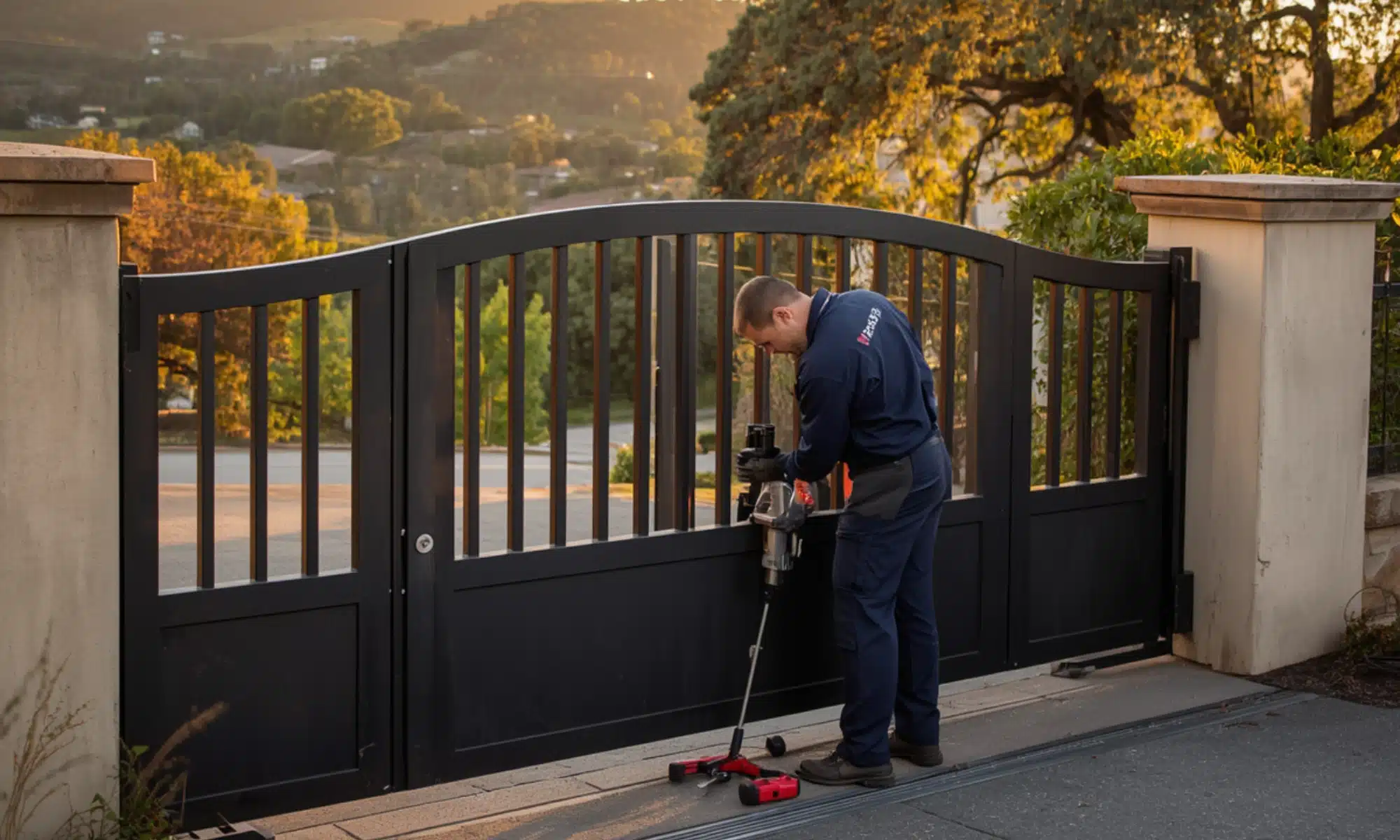

Your driveway gate suddenly stops working. Perhaps it is making strange noises, or maybe it refuses to open entirely. Consequently, you might wonder whether you should attempt to repair a gate yourself or immediately call a professional. This question confronts countless Walnut Creek homeowners annually, and the answer significantly impacts both your safety and your wallet.
Many property owners feel tempted by the potential cost savings of DIY gate repairs. However, automatic gates involve complex mechanical systems, electrical components, and substantial physical weight that create serious safety hazards. Therefore, understanding when you can safely handle repairs yourself versus when professional intervention becomes essential protects both your family and your investment.
In this comprehensive guide, we will explore the safety considerations of DIY gate repair, identify which tasks suit homeowner capabilities, and highlight critical situations requiring expert assistance. Additionally, we will examine specific risks associated with different gate types common throughout Contra Costa County. By the end, you will possess the knowledge necessary to make informed decisions about your gate maintenance and repair needs.
Understanding Gate Types and Their DIY Repair Complexity
Different gate systems present varying levels of complexity for DIY enthusiasts. Moreover, the type of gate installed on your property directly influences whether attempting to repair a gate yourself represents a reasonable option or a dangerous gamble.
Manual Swing Gates: Moderate DIY Potential
Manual swing gates typically offer the safest entry point for homeowners considering DIY repairs. These traditional gates operate without electrical components, which eliminates electrocution risks and complex automation troubleshooting. Furthermore, their mechanical simplicity means fewer potential failure points exist.
Common manual swing gate issues include sagging frames, misaligned hinges, and deteriorating latches. These problems often respond well to basic tools and straightforward adjustments. For instance, tightening loose hinge bolts or adjusting gate stop positions requires minimal technical expertise. Nevertheless, even these simpler systems demand caution; a heavy metal or wooden gate can cause serious injury if it falls during adjustment.
If you notice your manual swing gate dragging or failing to latch properly, you might successfully address these concerns yourself. However, structural issues involving gate posts or substantial frame damage typically exceed safe DIY parameters. In such cases, contacting a Walnut Creek swing gate repair specialist ensures both safety and proper restoration.
Sliding Gates: Limited DIY Applications
Sliding gates introduce additional complexity through their track systems, rollers, and counterbalance mechanisms. While some maintenance tasks remain accessible to homeowners, most repairs require professional expertise. Additionally, sliding gates often weigh several hundred pounds, creating significant crushing hazards during any adjustment process.
Homeowners can safely perform basic maintenance such as clearing track debris, lubricating rollers, and inspecting visible hardware. These preventive measures help avoid more serious problems developing. Conversely, issues involving the motor, limit switches, or track alignment demand specialized knowledge and tools. Attempting to repair a gate yourself when these components malfunction frequently results in further damage or personal injury.
For sliding gate systems experiencing operational problems, consulting a Walnut Creek sliding gate repair professional provides the safest resolution path. Their expertise ensures proper diagnosis without the risks associated with amateur troubleshooting.
Automatic and Electric Gates: Professional Territory
Automatic gates present the most compelling case against DIY repairs. These sophisticated systems integrate electrical power, mechanical drive systems, and safety sensors into a complex operational network. Consequently, attempting to repair a gate yourself with automated systems exposes you to multiple severe hazards simultaneously.
Electrical shock represents perhaps the most immediate danger. Gate operators typically utilize 110-volt or 220-volt power supplies, either of which can cause fatal electrocution. Furthermore, capacitors within gate motors retain lethal electrical charges even when disconnected from power sources. Without proper training and equipment, diagnosing electrical faults becomes extremely dangerous. For comprehensive electrical safety information from NIOSH, refer to the CDC Electrical Safety in the Workplace guidelines.
Beyond electrical risks, automatic gates contain powerful motors capable of generating substantial force. A malfunctioning gate can move unexpectedly during testing, potentially crushing limbs or causing other traumatic injuries. Safety sensors, while designed to prevent such accidents, often require precise calibration that exceeds typical homeowner capabilities.
Given these substantial risks, automatic gate repair in the Bay Area should always involve qualified technicians. Their training encompasses both electrical safety protocols and mechanical system expertise necessary for safe, effective repairs.
Critical Safety Hazards of DIY Gate Repair
Before deciding whether to repair a gate yourself, you must understand the specific dangers involved. This knowledge helps you accurately assess whether your skills and equipment match the task requirements.
Electrocution and Electrical Shock Risks
Electric gates and operators present genuine electrocution hazards that demand respect and caution. Even experienced DIY enthusiasts often underestimate these dangers. Moreover, electrical faults can create situations where metal gate components become energized, transforming the entire structure into a shock hazard.
Capacitors within gate motors store electrical energy specifically to provide startup torque for heavy gates. These components can retain dangerous charges for extended periods after power disconnection. Consequently, simply unplugging a gate operator does not guarantee safety during internal inspections or repairs.
Ground fault issues present additional electrocution risks, particularly in Walnut Creek’s climate where morning moisture and seasonal rains affect outdoor electrical systems. Damaged insulation or corroded connections can create hazardous conditions invisible to casual observation. Professional technicians possess specialized testing equipment to identify these dangers safely.
Mechanical Crushing and Pinch Hazards
Gate systems contain numerous pinch points and crushing hazards that can cause severe injuries. Heavy gates can weigh anywhere from several hundred to over a thousand pounds, depending on size and materials. Therefore, any situation where a gate might fall or shift unexpectedly presents potentially life-threatening danger.
Drive chains, gears, and sprockets in automated systems create severe pinch hazards during operation or manual testing. These components often move with surprising speed and force, catching fingers, hands, or clothing before operators can react. Similarly, counterbalance springs on some gate types store tremendous mechanical energy that releases violently if improperly handled.
Even manual gates pose crushing risks during hinge adjustments or post repairs. A gate supported temporarily during maintenance can shift or fall if not properly secured. Professional repair technicians utilize specialized braces, jacks, and safety equipment to control these risks; equipment most homeowners lack.
Property Damage and Liability Concerns
Beyond personal safety, attempting to repair a gate yourself carries significant property damage risks. Incorrect diagnoses often lead to unnecessary parts replacement, while improper installation techniques can damage gate components, surrounding structures, or vehicles.
DIY repairs may also void manufacturer warranties or create liability issues. If a gate you repaired injures a visitor or damages a vehicle, your homeowner’s insurance might deny coverage if unlicensed work contributed to the incident. Professional gate repair companies carry appropriate insurance and licensing that protects property owners from such liability exposure.
DIY Gate Maintenance: Safe Tasks for Homeowners
While major repairs should generally be left to professionals, certain maintenance activities remain safely within homeowner capabilities. Regular maintenance actually reduces the likelihood of major failures requiring professional intervention.
Visual Inspections and Preventive Care
Monthly visual inspections represent one of the most valuable DIY activities for gate longevity. During these inspections, look for obvious signs of wear, damage, or misalignment. Check hinges for rust or looseness, examine gate surfaces for corrosion or rot, and verify that safety sensors remain properly aligned.
Additionally, keep gate tracks clear of debris, leaves, and obstructions that impede smooth operation. Lubricate hinges, rollers, and chains using manufacturer-recommended products. These simple tasks require minimal technical knowledge yet significantly extend gate system lifespan.
For comprehensive guidance on maintaining your system properly, review these essential maintenance tips for gates. Proper maintenance schedules prevent many common problems that might otherwise tempt you to repair a gate yourself when professional help proves unnecessary.
Basic Troubleshooting Before Calling Professionals
Some apparent gate failures actually stem from simple issues you can safely address. Before contacting a repair service, verify that power connections remain secure, circuit breakers have not tripped, and remote control batteries function properly. Check for obvious obstructions in gate paths or visible damage to safety sensors.
Remote control programming issues sometimes resolve through simple reprogramming procedures outlined in your operator manual. Similarly, some gates feature manual release mechanisms that allow operation during power outages; understanding these features helps you assess whether you face an actual malfunction or a temporary operational mode.
However, if basic troubleshooting fails to resolve the issue, resist the temptation to disassemble components or test electrical systems. At this point, professional diagnosis becomes the safest, most cost-effective approach.
When Professional Gate Repair Becomes Essential
Certain situations absolutely require professional gate repair expertise. Recognizing these scenarios helps you avoid dangerous DIY attempts while ensuring timely, appropriate service.
Electrical System Malfunctions
Any issue involving gate electrical systems demands professional attention. Symptoms such as intermittent operation, failure to respond to controls, or unusual motor sounds indicate potential electrical faults. Similarly, gates that stop mid-cycle or reverse direction unexpectedly may have control board or sensor problems requiring specialized diagnostic equipment.
Professional technicians possess the training, tools, and safety equipment necessary to work on live electrical systems safely. They can accurately diagnose issues ranging from simple wiring faults to complex control board failures without risking personal injury or equipment damage.
For reliable service when electrical problems arise, consider affordable gate repair options in the Bay Area that provide professional expertise without excessive costs.
Structural Damage and Component Failures
Bent gate panels, broken welds, or damaged support posts require professional assessment and repair. These structural issues affect gate integrity and safe operation. Furthermore, proper repair often requires specialized welding equipment, metalworking tools, or concrete work capabilities beyond typical homeowner resources.
Gate posts represent particularly critical structural elements. These supports bear the entire weight of heavy gates while resisting wind loads and operational stresses. Consequently, post damage or deterioration compromises the entire installation’s safety. Professional gate post repair ensures proper depth, concrete anchoring, and alignment restoration.
Similarly, bent or damaged gate panels require professional straightening or replacement. Attempting to bend metal components back into shape without proper equipment often worsens damage or creates stress fractures that fail later. Professional metal gate repair services restore both appearance and structural integrity safely.
Safety System Malfunctions
Modern automatic gates incorporate multiple safety systems designed to prevent entrapment and injury. These include photocell sensors, edge sensors, and force limitation systems. Any malfunction in these safety components creates immediate hazards that demand professional correction. For official gate safety standards and requirements, consult the CPSC Gates and Enclosures Business Guidance.
If your gate fails to reverse when encountering obstacles, or if safety sensors appear misaligned or damaged, discontinue use immediately and contact a professional. Operating a gate with compromised safety systems exposes you to significant liability if injuries occur. Professional technicians can recalibrate or replace safety components to restore proper protective function.
Learn more about gate safety sensors and their critical function to better understand when professional service becomes essential.
Cost Considerations: DIY vs. Professional Repairs
Many homeowners attempt to repair a gate themselves primarily to save money. However, this calculation often proves shortsighted when considering total costs and risks.
Hidden Costs of DIY Repairs
DIY gate repair attempts frequently generate unexpected expenses. Incorrect diagnoses lead to unnecessary parts purchases, while improper installation techniques may damage additional components. Moreover, tools required for specialized repairs often cost more than professional service calls.
Time represents another significant DIY cost factor. What professionals accomplish in hours might consume your entire weekend or longer. Additionally, delayed repairs due to troubleshooting difficulties or parts ordering leave your property unsecured or inaccessible during the interim period.
Most importantly, personal injury costs can dwarf any potential DIY savings. Emergency room visits, lost work time, and potential long-term disability from gate-related accidents eliminate any economic advantage amateur repairs might offer.
Professional Service Value
Professional gate repair services provide value beyond immediate problem resolution. Technicians bring diagnostic expertise that identifies underlying issues preventing future failures. They also provide warranties on both parts and labor, protecting your investment if problems recur.
Professional repairs maintain manufacturer warranties and ensure code compliance. This documentation proves valuable if you sell your property or file insurance claims. Furthermore, professional maintenance often identifies developing problems before they cause complete system failures, saving money through preventive intervention.
For transparent pricing on professional services, review information about automatic gate repair costs to make informed budget decisions.
Choosing the Right Professional Gate Repair Service in Walnut Creek
When professional repairs become necessary, selecting qualified service providers ensures satisfactory results. Several factors should guide your selection process.
Licensing, Insurance, and Credentials
Verify that any gate repair company holds appropriate California contractor licensing for the work performed. General gate repair typically requires a C-61/D-28 license classification, while electrical work may require C-10 electrical contractor licensing. Proper licensing indicates that the contractor has met state requirements for competence and financial responsibility. For professional electrical safety standards applicable to gate systems, reference OSHA Electrical Safety Standards.
Insurance coverage proves equally important. Request certificates of insurance showing general liability and workers’ compensation coverage. This protection shields you from liability if workers are injured on your property or if repair activities damage your home or vehicles.
Additionally, inquire about technician training and certification. Manufacturers often certify technicians for specific gate operator brands, indicating specialized expertise with your particular equipment.
Local Experience and Reputation
Walnut Creek’s specific climate and regulatory environment create unique gate maintenance challenges. Local companies understand regional soil conditions affecting gate posts, common weather-related wear patterns, and municipal requirements for gate installations. This local knowledge enables more accurate diagnosis and appropriate repair solutions.
Research company reputation through online reviews, Better Business Bureau ratings, and references from previous customers. Established companies with strong local reputations have demonstrated commitment to customer satisfaction and quality workmanship.
For specialized needs, consider companies offering 24/7 emergency gate repair services in Walnut Creek when urgent situations arise outside normal business hours.
Service Guarantees and Warranties
Reputable gate repair companies stand behind their work with written warranties. These guarantees should cover both parts and labor for reasonable periods, typically ranging from 90 days to one year depending on the repair type. Clear warranty terms demonstrate company confidence in their workmanship and provide you recourse if problems develop.
Additionally, inquire about maintenance programs that help prevent future issues. Regular professional maintenance often proves more economical than emergency repairs while extending system lifespan significantly.
Frequently Asked Questions About DIY Gate Repair Safety
What are the most dangerous DIY gate repair mistakes homeowners make?
The most dangerous mistakes include attempting electrical repairs without proper training, working on heavy gates without adequate support, and bypassing safety systems to “test” gate operation. Additionally, homeowners often underestimate gate weight and the force generated by automatic operators. These errors can result in electrocution, crushing injuries, or entrapment accidents. Therefore, understanding your limitations and recognizing when professional expertise becomes essential protects both your safety and your property.
Can I safely lubricate my automatic gate components myself?
Yes, basic lubrication represents a safe DIY maintenance task for most homeowners. However, you must use appropriate lubricants specified by your gate manufacturer; incorrect products may attract dirt or damage seals. Furthermore, never lubricate electrical components, safety sensors, or belt drives unless specifically directed by manufacturer documentation. Always disconnect power before working near moving parts, and avoid applying excessive lubricant that could drip onto tracks or sensors. If you are uncertain about specific lubrication points, consult your owner’s manual or contact a professional for guidance.
How do I know if my gate problem is electrical or mechanical?
Electrical problems typically manifest as complete operational failure, intermittent function, or erratic movement patterns. You might notice the gate failing to respond to remote controls, stopping mid-cycle, or reversing direction unexpectedly. Mechanical issues usually produce visible symptoms such as sagging, binding, unusual noises during movement, or physical damage to components. However, distinguishing between electrical and mechanical causes often requires specialized testing equipment and expertise. Consequently, when symptoms suggest electrical involvement, professional diagnosis becomes the safest approach rather than attempting to repair a gate yourself.
Is it safe to manually operate my automatic gate when the power is out?
Most automatic gates feature manual release mechanisms specifically designed for emergency operation during power failures. These systems are generally safe when used according to manufacturer instructions. However, you must understand the proper release procedure for your specific model, as incorrect operation may damage the operator or create safety hazards. Additionally, some gates are extremely heavy and difficult to move manually, particularly uphill or on uneven surfaces. If manual operation proves difficult or the gate seems unstable, wait for professional assistance rather than risking injury.
What should I do if my gate is stuck closed and I need to leave immediately?
First, check for obvious obstructions in the gate path or visible damage that might explain the malfunction. Verify that power is reaching the operator and that circuit breakers have not tripped. If your gate has a manual release mechanism, consult your owner’s manual for proper activation procedures. However, if you cannot quickly identify and safely resolve the issue, contact an emergency gate technician rather than forcing the gate or attempting risky DIY solutions. Professional emergency services can often resolve stuck gates quickly without causing additional damage or safety hazards.
How can I prevent gate problems that require professional repair?
Regular preventive maintenance significantly reduces the likelihood of major gate failures. Implement monthly visual inspections to identify developing issues before they cause complete failures. Keep tracks clear of debris, lubricate moving parts according to manufacturer schedules, and test safety systems periodically to verify proper function. Additionally, address minor problems promptly before they escalate into major repairs. For comprehensive protection, consider establishing a professional maintenance agreement that includes periodic inspections and preventive service. This proactive approach often costs less than emergency repairs while ensuring reliable gate operation year-round.
Are there any gate repairs that are always safe for DIY?
Very few repairs are universally safe for all homeowners, as safety depends on your specific skills, tools, and the gate system involved. Generally, cosmetic touch-ups, debris removal, and basic hardware tightening fall within safe DIY territory for mechanically inclined homeowners. However, even these tasks require proper safety equipment including gloves and eye protection. Furthermore, if your gate is under warranty, DIY repairs may void coverage. When in doubt, consulting a professional provides the safest course of action while protecting your investment and personal safety.
Conclusion: Making Smart Decisions About Gate Repair
Deciding whether to repair a gate yourself requires honest assessment of your capabilities, available tools, and the specific problem at hand. While certain maintenance tasks and basic troubleshooting remain safely within homeowner abilities, significant repairs involving electrical systems, structural components, or safety mechanisms demand professional expertise.
The risks associated with DIY gate repair extend beyond personal injury to include property damage, liability exposure, and potentially voided warranties. Moreover, the complexity of modern automatic gate systems means that amateur repairs often create additional problems requiring more extensive professional intervention.
For Walnut Creek homeowners, partnering with established local gate repair professionals provides the safest, most reliable solution for significant gate issues. Professional technicians bring specialized training, appropriate insurance coverage, and local expertise that ensures repairs are completed safely and correctly the first time.
If you are experiencing gate problems or simply want to establish a preventive maintenance program, contact Rolling Gates today. Our experienced technicians serve Walnut Creek and throughout Contra Costa County, providing expert gate repair, maintenance, and installation services. We offer transparent pricing, comprehensive warranties, and 24/7 emergency response for critical situations.
Don’t risk your safety with DIY gate repairs. Call Rolling Gates at 888-588-1470 or visit our Walnut Creek service page to schedule professional service today.