
Converting manual gates to automatic systems has become increasingly popular among Bay Area property owners. Moreover, the convenience of remote access combined with enhanced security features makes this upgrade a smart investment for residential and commercial properties alike. Therefore, whether you operate a swing gate or sliding gate configuration, modern automation technology offers seamless solutions tailored to your specific needs.
To begin with, Rolling Gates specializes in helping homeowners throughout the Bay Area transform their existing manual entryways into sophisticated automatic systems. In addition, this comprehensive guide explores everything you need to know about upgrading your property access control.
Why Homeowners Choose to Convert Manual Gates to Automatic
First and foremost, the decision to upgrade from manual operation to automated functionality addresses multiple practical concerns. For example, many property owners initially installed manual barriers for cost reasons or because automation seemed unnecessary. However, lifestyle changes and technological advancements often prompt reconsideration.
Undoubtedly, daily convenience stands as the primary motivation. For instance, imagine arriving home during a rainy San Francisco evening without leaving your vehicle to open the entrance. Similarly, parents appreciate eliminating the need to unbuckle children from car seats merely to access their driveway. Furthermore, elderly residents and those with mobility challenges find automatic operation essential for maintaining independence.
In addition to convenience, security enhancements provide another compelling reason. Specifically, automated systems integrate with access control systems allowing you to monitor and manage entry points remotely. As a result, you can verify visitor identity before granting access, creating a safer environment for your family or business operations.
Besides security, property value increases represent a significant benefit. In fact, real estate professionals consistently report that automated entryways appeal to potential buyers. Consequently, this upgrade signals modern maintenance and attention to security infrastructure.
Assessing Your Current Gate for Automation Compatibility
Before proceeding with any conversion project, professional evaluation determines feasibility. However, not every existing structure accommodates automation equally. Therefore, several factors influence compatibility.
To start with, structural integrity matters most. In other words, your current framework must support the additional weight and mechanical stress of automation equipment. For example, wooden barriers may require reinforcement. Likewise, metal frameworks need examination for rust or weakness, particularly in coastal Bay Area communities where salt air accelerates corrosion.
Additionally, swing gates require adequate clearance arcs. Specifically, the path must remain unobstructed throughout the entire opening sequence. Nevertheless, nearby landscaping, walls, or grade changes can interfere with proper operation. On the other hand, sliding configurations need parallel fence lines and level ground tracks.
Finally, electrical accessibility presents practical considerations. Namely, most automation systems require nearby power sources. Consequently, properties in remote Marin County hills or rural Sonoma County locations may need electrical infrastructure upgrades. Fortunately, solar-powered gate openers offer excellent alternatives where traditional wiring proves challenging.
The Conversion Process: What to Expect
In order to set realistic expectations, understanding the transformation timeline helps. Generally speaking, professional conversion typically completes within one to three days depending on complexity and existing conditions.
Initially, consultation involves measuring your current setup and discussing operational preferences. Subsequently, technicians evaluate swing radius, weight distribution, and usage frequency. As a result, this assessment determines appropriate motor sizing and mounting configurations.
Next, installation phases include securing the operator mechanism, installing control panels, and establishing power connections. Moreover, safety device placement ensures compliance with UL 325 standards. Specifically, photoelectric sensors prevent closure when obstacles exist in the pathway.
Afterward, programming follows physical installation. Notably, modern systems offer smartphone integration, keypad entry, and remote control options. Therefore, our technicians configure these features according to your specific requirements.
Lastly, testing protocols verify proper function under various conditions. In conclusion, we simulate different scenarios ensuring reliable operation whether you access your property during morning fog or evening traffic.
Types of Automatic Gate Systems Available
To illustrate the options, the automation market offers diverse solutions matching different architectural styles and functional needs. Thus, understanding available options helps inform your decision.
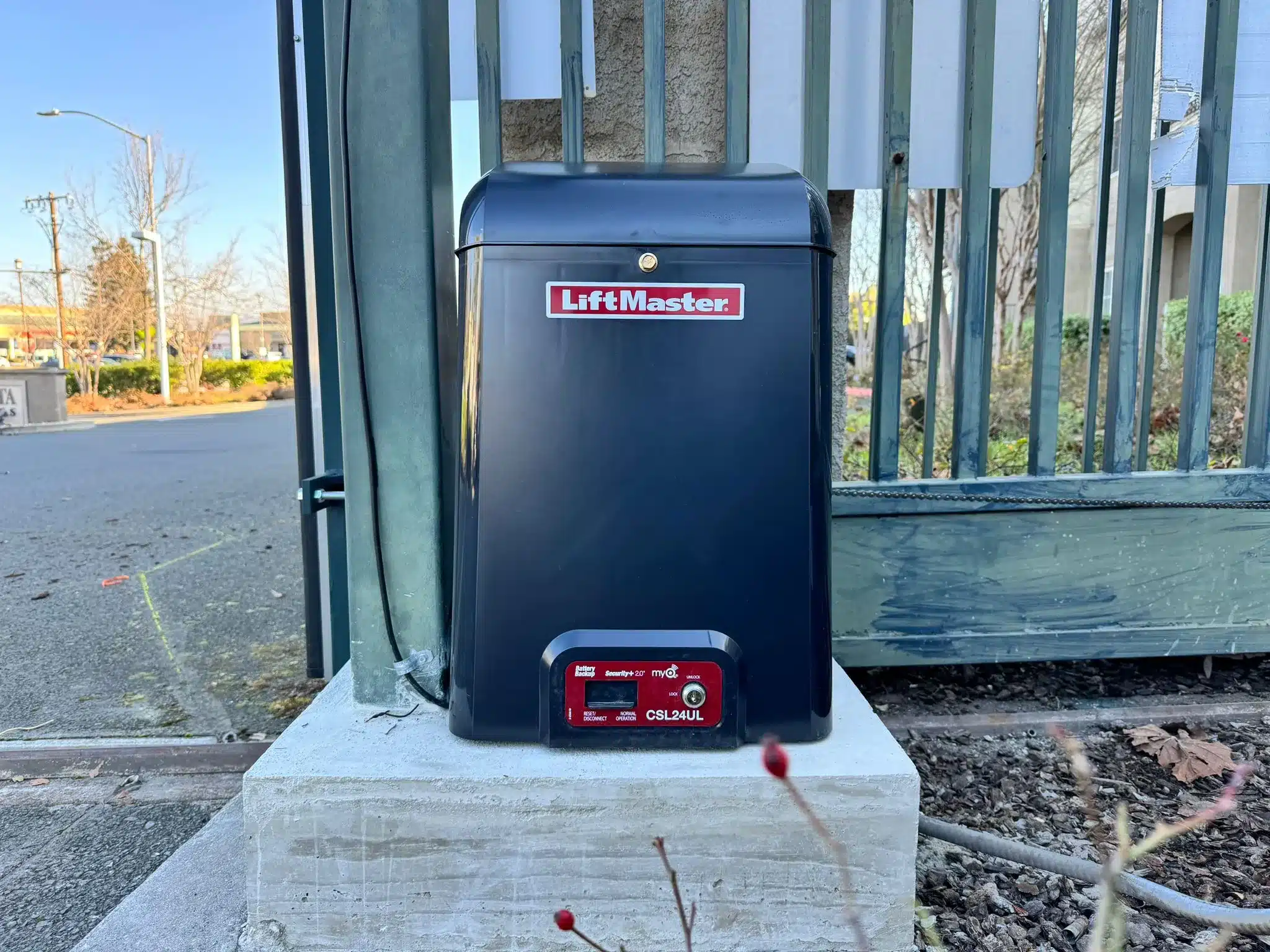
To begin with, swing gate operators attach to existing hinged barriers using articulated arms or underground hydraulic mechanisms. For example, articulated arm operators work well for standard residential applications. In contrast, underground systems preserve aesthetic clean lines by hiding mechanical components below grade. Consequently, this option suits historic Pacific Heights properties where visual impact matters.
Alternatively, sliding gate motors benefit properties with limited space. Specifically, the motor pulls the barrier horizontally along a track parallel to the fence line. As a result, this configuration works exceptionally well for steep San Francisco driveways where swing arcs would intersect with sidewalk traffic.
Finally, barrier gate arms suit commercial properties and parking facilities. In essence, these systems raise and lower horizontal bars controlling vehicle access. Although less common for residential estates, they suit multi-tenant Oakland apartment complexes and business parks.
Smart Features and Modern Integration Capabilities
Moving forward, today’s automatic systems extend far beyond simple remote operation. Indeed, integration with home automation ecosystems creates sophisticated property management capabilities.
For example, cellular connectivity allows operation from anywhere with internet access. Furthermore, you can grant temporary access to delivery drivers while monitoring package drop-offs via integrated camera systems. Additionally, geofencing technology detects your approaching vehicle, initiating opening sequences before you reach the entrance.
Besides that, voice control compatibility with popular smart home platforms enables hands-free operation. Simply put, instruct your virtual assistant to open the driveway access when carrying groceries or managing children.
Most importantly, battery backup systems ensure function during power outages. Given that California experiences Public Safety Power Shutoff events, this feature proves particularly valuable for Napa County and Sonoma County residents.
Maintenance Requirements for Converted Systems
In comparison to manual counterparts, automated mechanisms require different maintenance approaches. Nevertheless, regular upkeep ensures longevity and reliable performance.
Firstly, monthly visual inspections identify obvious issues like debris accumulation or physical damage. Secondly, quarterly lubrication of moving parts prevents premature wear. Thirdly, annual professional service visits address internal components and safety system calibration.
Equally important, weather protection matters significantly in Bay Area microclimates. For instance, coastal properties in Sausalito or Mill Valley experience salt air corrosion requiring more frequent attention. Conversely, inland locations like Walnut Creek or Pleasanton contend with dust and temperature extremes.
In summary, Rolling Gates offers comprehensive gate repair and maintenance programs specifically designed for automated systems. Consequently, our service agreements provide peace of mind through proactive care.
Safety Considerations and Regulatory Compliance
With regard to safety, California maintains strict standards for automated entry systems. Therefore, professional installation ensures compliance with these regulations protecting your family and limiting liability exposure.
Specifically, UL 325 standards mandate entrapment protection and automatic reversal mechanisms. In addition, proper installation includes visible warning signage and manual release capabilities for emergency situations.
Moreover, regular testing of safety sensors prevents accidents involving children, pets, or vehicles. For this reason, professional technicians verify these systems during routine maintenance visits.
Regarding insurance implications, many carriers offer premium discounts for properties with professionally installed automated security features. Hence, documentation of proper installation and maintenance supports these claims.
Cost Factors and Investment Considerations
When it comes to financial aspects, understanding variables helps budget appropriately for your conversion project. Specifically, several factors influence overall investment levels.
To start with, gate size and weight determine motor capacity requirements. For example, larger estates in Atherton or Woodside demand heavier-duty equipment than standard suburban installations. Likewise, material composition affects mounting hardware and reinforcement needs.
In addition, feature selection impacts pricing significantly. To clarify, basic remote operation costs less than smartphone integration with video intercom capabilities. Meanwhile, intercom systems add convenience but require additional infrastructure.
On the other hand, existing condition influences preparation work scope. Although gates requiring structural reinforcement or electrical upgrades increase project complexity, these improvements often address deferred maintenance needs simultaneously.
Ultimately, long-term value calculations should include energy costs, maintenance expenses, and potential insurance savings. In most cases, property owners recover their investment through convenience and security benefits within several years.
DIY vs Professional Installation: Making the Right Choice
Although automation kits exist for consumer installation, professional service offers distinct advantages. Specifically, safety compliance, warranty protection, and proper function depend significantly on installation quality.
First of all, professional technicians understand local soil conditions affecting foundation stability. Additionally, they recognize electrical code requirements specific to Alameda County or Contra Costa County jurisdictions. Because of this, expertise prevents costly corrections and safety hazards.
Furthermore, manufacturer warranties typically require professional installation for validity. In contrast, DIY attempts may void coverage leaving you responsible for future repair costs. Above all, verify your installer holds proper credentials through the California State License Board to ensure compliance with state contracting laws.
Lastly, integration complexity often exceeds amateur capabilities. To summarize, proper alignment, force adjustment, and safety calibration demand specialized tools and training. Therefore, substandard installation risks property damage or personal injury.
Regional Considerations for Bay Area Properties
Given that local geography and climate create unique challenges, understanding these factors ensures appropriate system selection and installation.
To begin with, seismic activity requires flexible mounting systems accommodating ground movement. As a result, structures must withstand occasional shaking without mechanical failure. Consequently, professional installers familiar with California building codes address these requirements.
Similarly, microclimate variations across the Bay Area affect equipment selection. For example, coastal fog creates moisture challenges requiring corrosion-resistant components. In contrast, inland heat demands motors rated for temperature extremes. Thus, San Jose installations face different conditions than Berkeley properties.
Finally, HOA regulations in planned communities like Dublin or San Ramon may restrict automation aesthetics or noise levels. For this reason, professional consultation ensures compliance with community guidelines.
Frequently Asked Questions
Can any manual gate be converted to automatic operation?
Most existing structures can accommodate automation with proper modification. However, severely deteriorated or improperly installed manual systems may require rebuilding before conversion. Therefore, professional assessment determines specific feasibility for your property. In particular, swing, sliding, and barrier configurations each present different conversion potential.
How long does the conversion process typically take?
Standard residential conversions complete within one to three days. Nevertheless, complex commercial installations or projects requiring significant structural modification may extend longer. Additionally, weather conditions and permit acquisition can affect scheduling. As a result, Rolling Gates provides detailed timeline estimates during initial consultation.
Will converting my manual gate to automatic increase my property value?
Real estate professionals consistently report that automated entry systems enhance curb appeal and security perception. Consequently, this upgrade often differentiates properties in competitive Bay Area markets. Specifically, buyers appreciate move-in ready automation without undertaking improvement projects themselves.
What happens during power outages?
Modern systems include battery backup options maintaining function during electrical interruptions. Alternatively, manual release mechanisms allow physical operation when automation fails. Furthermore, solar charging capabilities provide additional resilience for properties in areas with unreliable grid service.
Can I keep my existing gate material when upgrading to automatic?
Absolutely. In fact, wood, wrought iron, aluminum, and steel barriers all accommodate automation. Specifically, the operator mechanism attaches to your current structure without requiring material changes. Although some situations benefit from reinforcement, original aesthetic character remains intact.
Do automatic gates require different maintenance than manual versions?
Yes. Specifically, automated systems need periodic lubrication, electrical connection checks, and safety sensor testing. However, these requirements are minimal compared to the convenience benefits. Consequently, professional maintenance agreements handle these tasks ensuring optimal performance.
Are there weight limitations for gate automation?
Commercial-grade operators handle substantial weights exceeding residential needs. Generally, standard systems accommodate most residential barriers comfortably. On the other hand, extremely heavy custom designs may require specialized equipment. Therefore, assessment during consultation determines appropriate motor sizing.
Can I control my automatic gate with my smartphone?
Contemporary systems offer robust smartphone integration. For example, dedicated applications allow remote operation, access logging, and temporary code generation for visitors. As a result, this technology proves particularly valuable for Santa Clara County tech professionals accustomed to connected home ecosystems.
Conclusion
In conclusion, converting manual gates to automatic operation represents a significant upgrade for Bay Area properties. Indeed, the combination of convenience, security, and property value enhancement makes this investment worthwhile for most homeowners. Moreover, modern technology offers solutions for virtually every configuration and budget level.
To sum up, Rolling Gates brings extensive experience to automation projects throughout the Bay Area. From initial assessment through ongoing maintenance, our team ensures your converted system performs reliably for years. Specifically, we understand local conditions and regulations specific to communities from Marin County to Silicon Valley.
In short, contact us today to schedule your consultation. Ultimately, discover how easily your manual entryway can transform into a sophisticated automatic system enhancing your daily life and property security.